


One pill. Big job.
One small pill. A really big job — quietly preventing a stroke.

Blood Thinner Safety
Today, how to use your blood thinner safely. Let's keep you protected.
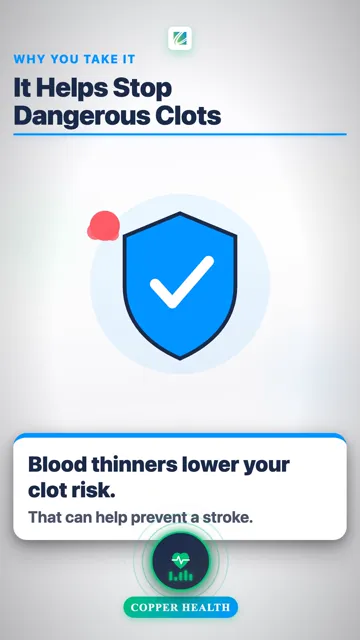
It Helps Stop Dangerous Clots
So why do you take a blood thinner? Your blood thinner makes it harder for dangerous clots to form. A clot can travel to your brain and cause a stroke, or get stuck in your lungs. By lowering that risk, this medicine helps protect you. Whether it's warfarin, or one like apixaban or rivaroxaban, the goal is the same.
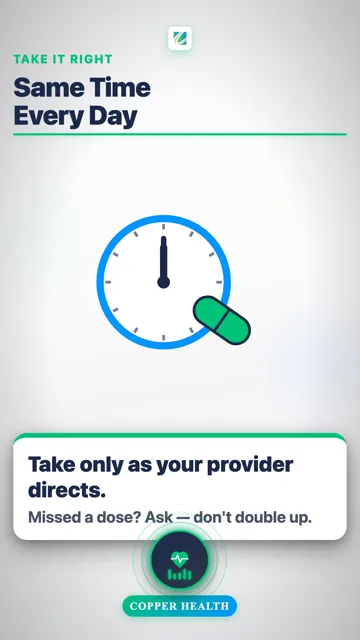
Same Time Every Day
For a blood thinner to work, take it exactly as your provider directs — and try to take it at the same time every single day. Pick a time you'll remember, like with breakfast. And here's an important one. If you miss a dose, don't take two to catch up. Call your provider or pharmacist and ask what to do.
Watch for Bleeding
The main trade-off with a blood thinner is bleeding. So learn the signs — so you can act early.
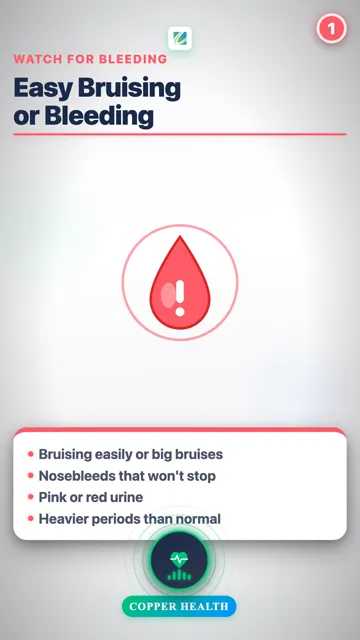
Easy Bruising or Bleeding
Some bleeding signs are easy to miss, so watch for these. You bruise more easily, or you get large bruises you can't explain. A nosebleed that just won't stop. Your urine looks pink or red. Or, for women, periods that are much heavier than normal. If you notice these, call your provider — don't wait.
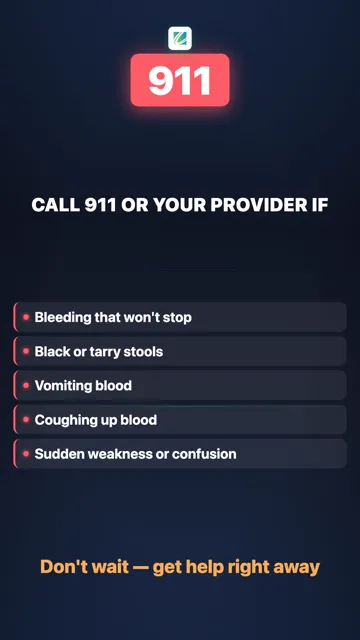
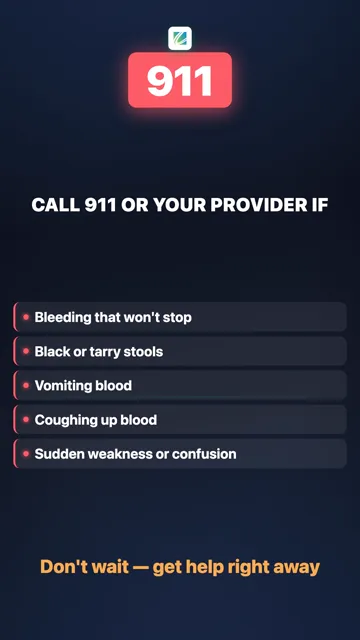
Call 911 or Your Provider If
But some signs are an emergency. Bleeding that won't stop, black or tarry stools, or vomiting blood — call 911 or your provider right away. Also call if you cough up blood, or feel suddenly weak or confused. These can mean serious bleeding. Don't wait.
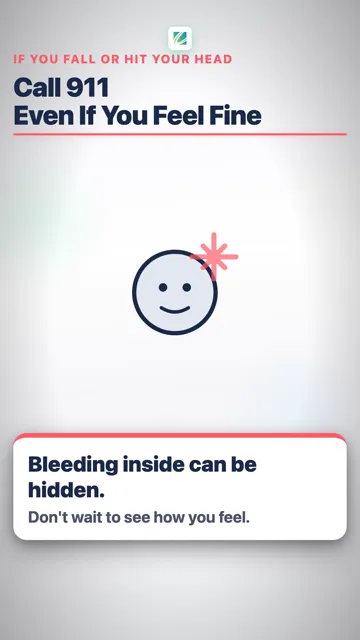
Call 911 Even If You Feel Fine
Here's one many people don't know. If you have a fall or hit your head while on a blood thinner, call 911 even if you feel fine — bleeding inside can be hidden.
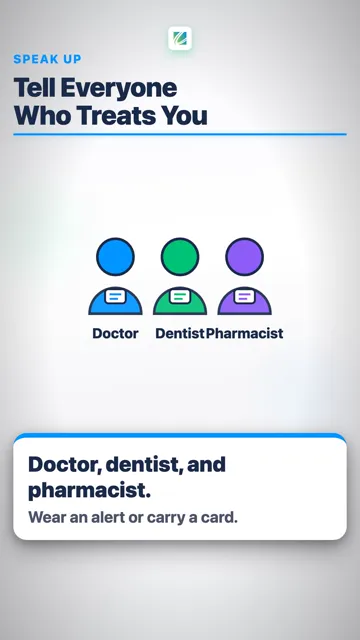
Tell Everyone Who Treats You
Speak up, every time. Tell every doctor, dentist, and pharmacist that you take a blood thinner — even for a small procedure. And wear a medical alert, or carry a wallet card, so others know in an emergency.
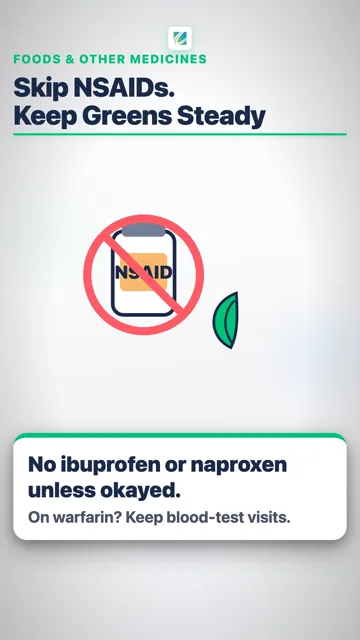
Skip NSAIDs. Keep Greens Steady
Other medicines matter too. Avoid pain pills like ibuprofen or naproxen, and many supplements, unless your provider okays them — they can raise your bleeding risk. And if you take warfarin, keep the blood-test visits your provider sets, and keep leafy greens about the same amount each week.
Remember
Remember — same time daily, watch for bleeding, tell everyone.
Next: spot a clot early
Know the warning signs of the very clots your blood thinner is preventing — that's next.
About this information
This information was created with AI assistance and is for educational purposes only. AI can make mistakes. Always follow your doctor's advice and consult your healthcare provider for medical decisions.