

The first 3 days home are the most dangerous.
The first three days home are the most dangerous. Here is how to stay safe.
Your First 72 Hours Home
Your first seventy-two hours at home. Four things to get right.
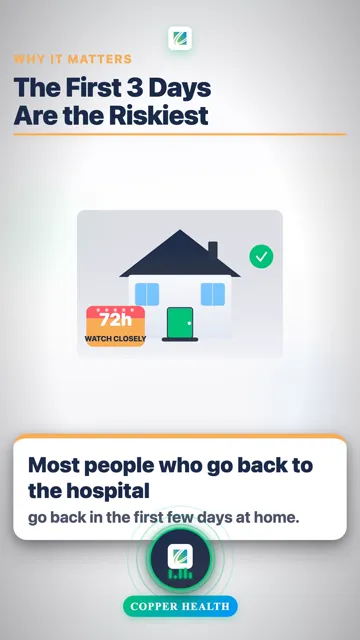
The First 3 Days Are the Riskiest
Here is what most people don't know. The trip from the hospital to home is one of the riskiest times in healthcare. Most people who end up back in the hospital go back in the first few days at home. But you can change that. Four simple things — done right — can keep you safe and at home where you belong.
Your List Changed in the Hospital
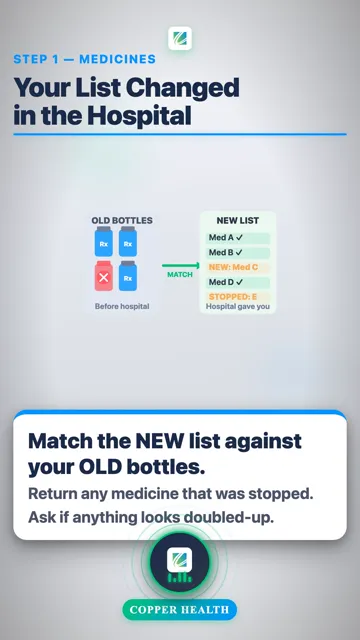
Number one — your medicines. Here is something many people don't realize. Your medicine list often changed while you were in the hospital. Some medicines may have been stopped. Others may be new. When you get home, sit down and match the new list you got at discharge against your old bottles. If a medicine you were taking is not on the new list, don't take it — it may have been stopped. Return it to your pharmacist. And if anything looks like a double, ask your nurse before you take it.
Know Your Next Appointment
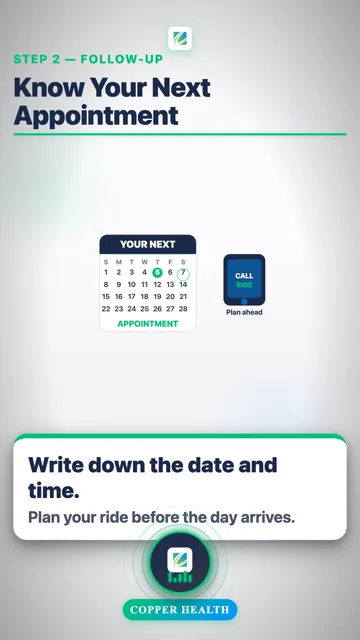
Number two — your follow-up visit. Before you leave the hospital, make sure you know when your next appointment is and how to get there. Write down the date and the time. If you need a ride, plan it now — not the morning of. Missing that appointment is one of the fastest ways to end up back in the hospital. Can't find the appointment? Call your home health nurse and they will help you.
Know YOUR Warning Signs
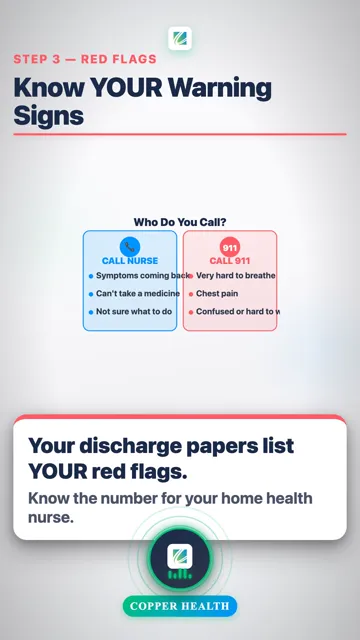
Number three — know your warning signs. Your discharge papers will list the signs to watch for — signs that are specific to what you were in the hospital for. Read them today. If your symptoms start coming back, or you can't take a medicine, call your home health nurse right away. Don't wait. But if you have very bad trouble breathing, chest pain, or you feel confused and can't wake up all the way — call 911. Better to call and be told you're fine than to wait and end up back in the emergency room.
CALL 911 RED ZONE
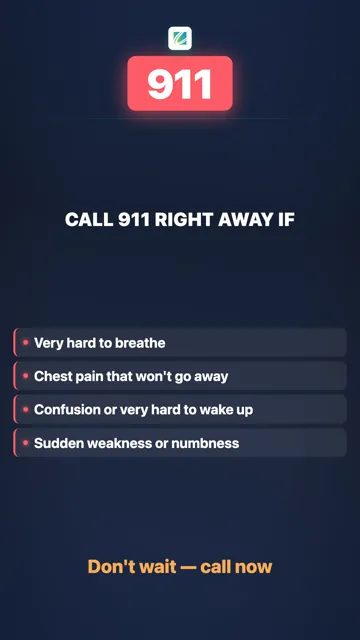
Some signs are emergencies. Call 911 right away if you have very bad trouble breathing. Call 911 for chest pain that won't go away — or if you feel confused and can't wake up all the way. Or sudden weakness or numbness. These can be life-threatening. Do not drive yourself. Call 911 now.
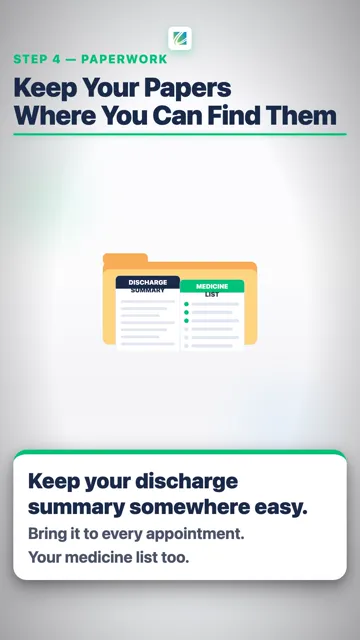
Keep Your Papers Where You Can Find Them
Number four — your paperwork. Before you do anything else, put your discharge summary and your medicine list somewhere easy to find. A kitchen drawer, a folder by your chair — somewhere you can grab it fast. Bring both to every appointment. Your providers need to see what changed in the hospital.
Quick Check
Quick check before we finish. What is the first thing to check when you get home with new prescriptions? Match the new list against your old bottles.
Why is a home health nurse calling you?
Why does a home health nurse come to your house? That is exactly what the next video answers. Watch next.
About this information
This information was created with AI assistance and is for educational purposes only. AI can make mistakes. Always follow your doctor's advice and consult your healthcare provider for medical decisions.