

120 over 80
A hundred twenty over eighty. What do those numbers mean?
Blood Pressure Basics
Let's make blood pressure simple, so you understand your own numbers.
What 120/80 Means
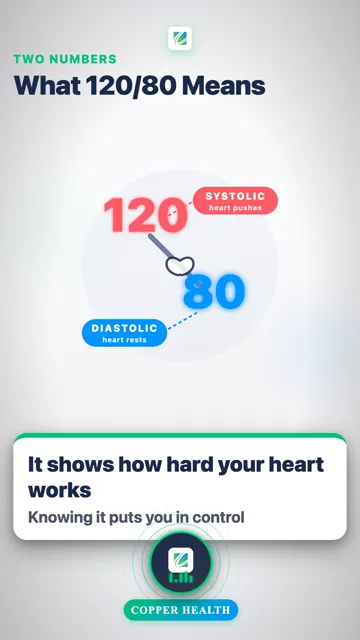
So what is blood pressure? It's the force of your blood pushing against your blood vessels as your heart pumps. That's why there are two numbers. Here's why it matters. When you know your numbers and check them at home, you can spot changes early and share them with your doctor. Knowing puts you in control. Let's break each one down.
Systolic
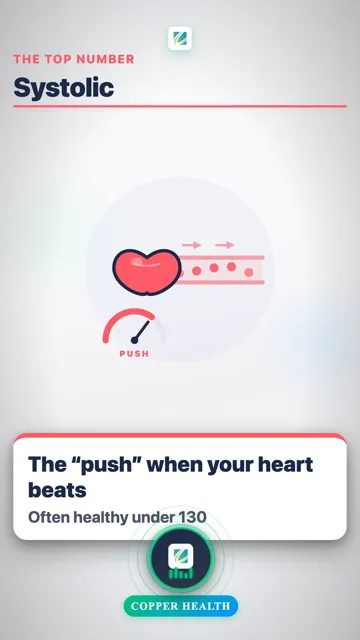
Let's start with the top number. It's called systolic. An easy way to remember it. The top number is the push. It's the pressure in your blood vessels the moment your heart squeezes and pushes blood out. The harder that push, the higher the top number. For many adults, a top number under one hundred thirty is often considered healthy. But that's just a guide. Your own healthy number is set by your doctor.
Diastolic
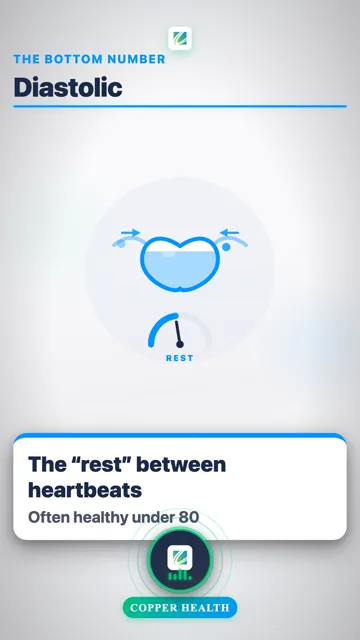
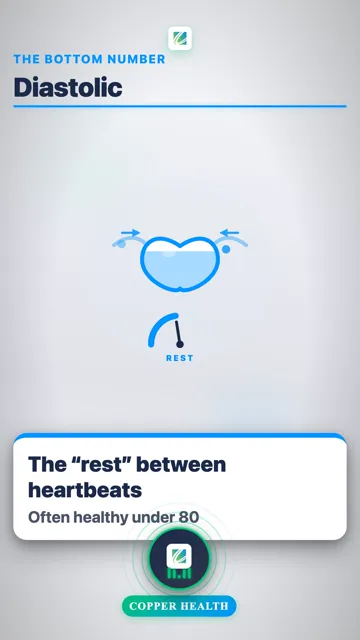
Now the bottom number. It's called diastolic. The easy way to remember it? The bottom number is the rest. It's the pressure in your blood vessels between heartbeats, when your heart relaxes and refills. So the top is the push, and the bottom is the rest. Push and rest. For many adults, a bottom number under eighty is often considered healthy. But again, only a guide. Your doctor sets the right number for you.
Ask Your Doctor
Those healthy ranges are just a guide. Your own target may be different, so ask your doctor what's right for you.
Now, how to measure at home
Now that you know what the numbers mean, let me show you how to measure them at home. An accurate reading is all about a few steps. Get these right, and you can trust your numbers.
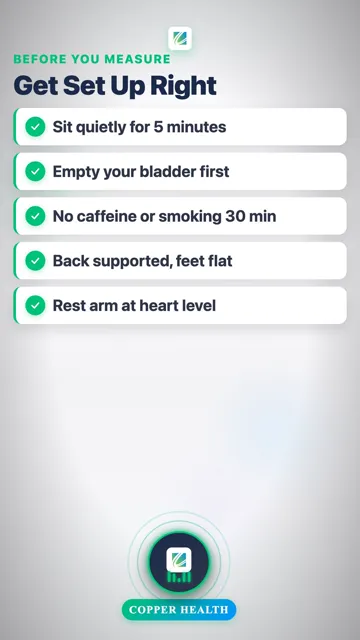
Get Set Up Right
Before you measure, set yourself up the right way. First, sit quietly and rest for about five minutes. Empty your bladder first, because a full bladder can nudge the reading up. And skip caffeine and smoking for about thirty minutes before. Now sit with your back supported and your feet flat on the floor. Don't cross your legs. Rest your arm on a table, relaxed and about level with your heart. These small steps make a big difference.
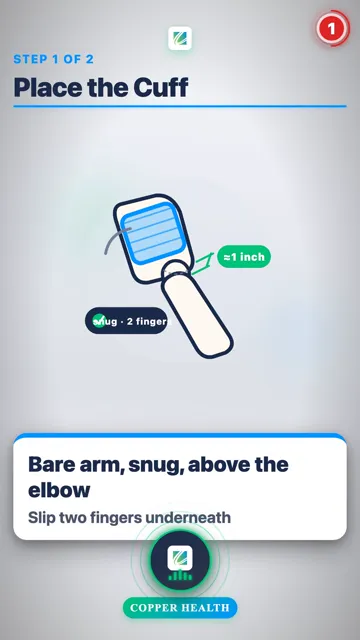
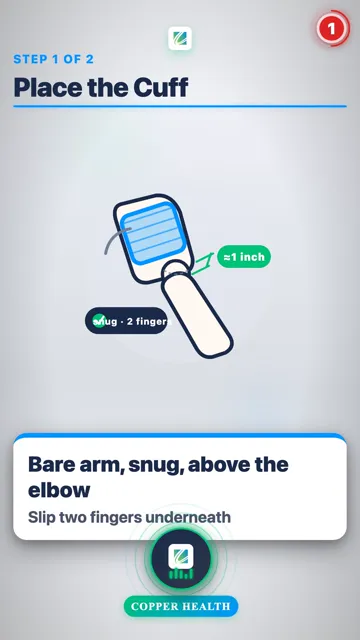
Place the Cuff
Step one. Place the cuff. Put the cuff on a bare arm, not over a sleeve. A tight sleeve can squeeze your arm, so slip it off if you can. Wrap the cuff snugly around your upper arm, just above your elbow. Snug, but not too tight. Here's an easy check. You should be able to slip two fingers under the edge of the cuff. Then you're ready to measure.
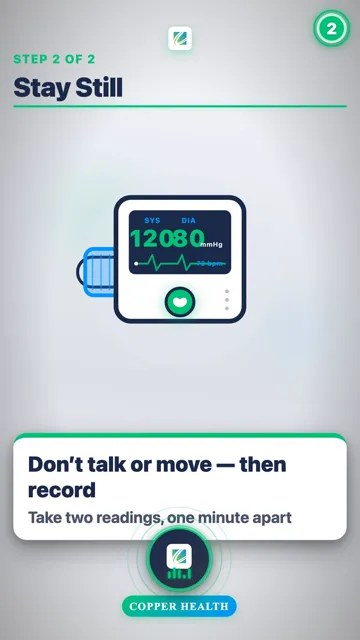
Stay Still
Step two. Stay still. Press start, then stay quiet and relaxed. Don't talk, and don't move your arm, because that can change the result. When it's done, write the numbers down, with the date and time. One more habit. Take two readings, about a minute apart, and write both down. Two readings are more reliable than one.
HELPFUL TIP
A helpful tip. Measure at the same times each day, like morning and evening. Checking at steady times gives you tracking you can trust.
REMEMBER
And remember. One high reading by itself usually isn't an emergency. It's the pattern over time that matters most, so share your log with your doctor.
Why do legs swell?
So why do legs and ankles swell up? It can be a quiet clue from your heart. We'll show you what to do. Watch next.
About this information
This information was created with AI assistance and is for educational purposes only. AI can make mistakes. Always follow your doctor's advice and consult your healthcare provider for medical decisions.