


Waking up gasping?
Do you wake up gasping for air at night? You can change that, tonight.

Sleep Positioning
Today, how the way you lie down helps you breathe and sleep better.
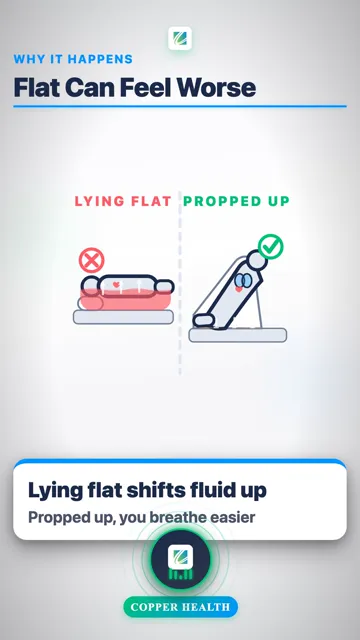
Flat Can Feel Worse
So why is night-time harder? When you lie down flat, fluid can shift up toward your lungs. That can make breathing feel tight, or start a cough. But when you prop your upper body up, that fluid settles lower, away from your lungs. Breathing feels easier.
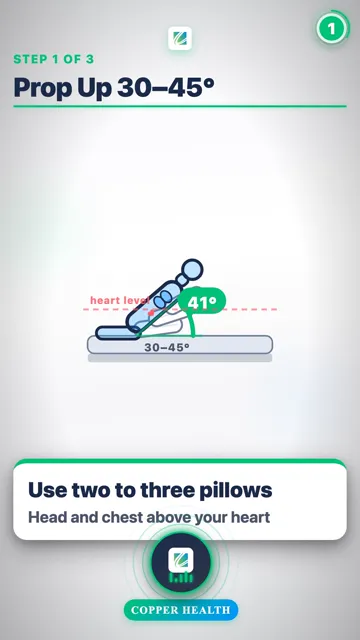
Prop Up 30–45°
Step one. Prop yourself up. Stack two or three firm pillows behind you, so they support your head and your chest, not just your neck. Aim for a gentle slope, around thirty to forty-five degrees. The goal is simple. Get your head and chest a bit higher than your heart.
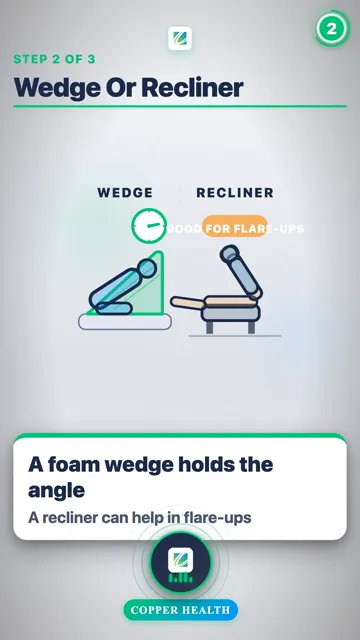
Wedge Or Recliner
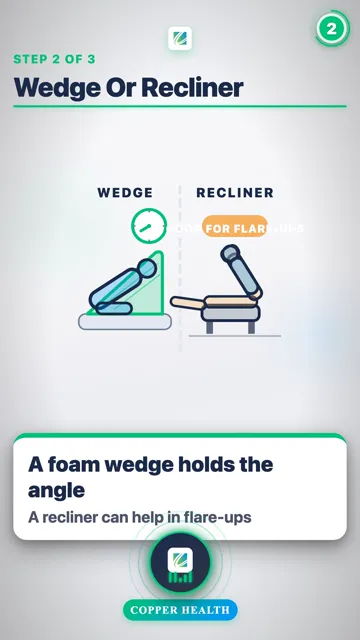
Step two. If pillows slide around, try a wedge or a recliner. A foam wedge is shaped like a ramp. It holds that slope all night, so you don't wake up flat. And on a rough night, when your breathing is worse, a recliner can help. It props you up with no effort.
Support Your Whole Back
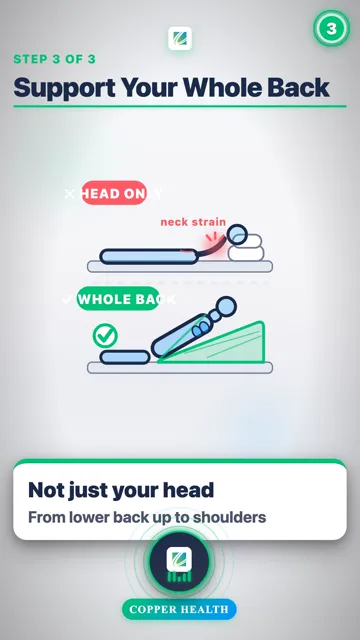
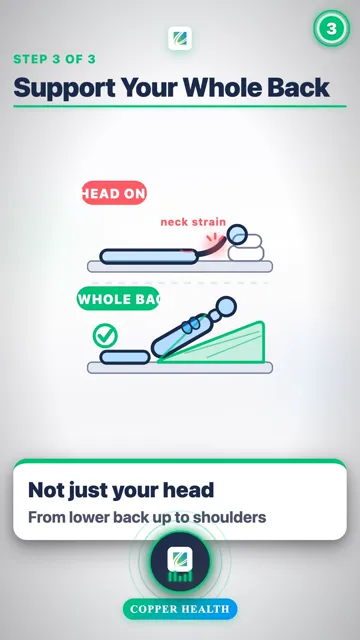
Step three. Support your whole back, not just your head. If you prop only your head, your chest stays low and it barely helps. Instead, build support from your lower back all the way to your shoulders. That opens your chest so your lungs can work.
Needing More Pillows
Here's an important warning sign. If you suddenly need more pillows than usual to breathe at night, that can mean your heart failure is getting worse. Tell your doctor or nurse right away.
Sleep Even Better
A few more tips. Keep your bedroom cool. Skip big, heavy meals before bed. And go easy on evening fluids, within your daily limit.
Remember
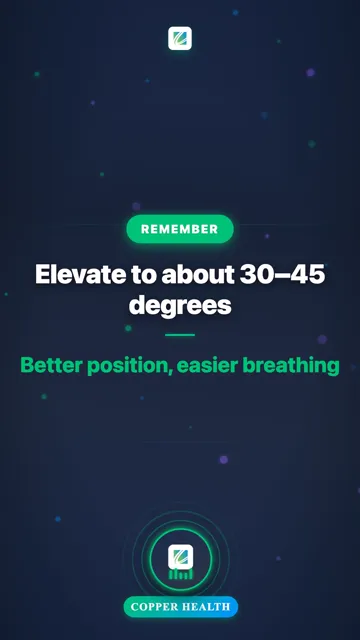
Here's the one thing to remember. Can you picture the angle? Prop up to about thirty to forty-five degrees. Better position, easier breathing.
Sleep is just the start
Sleeping better is just the start. There's one daily habit that can change how you live with heart failure. Curious what it is? Watch next, on living well with heart failure.
About this information
This information was created with AI assistance and is for educational purposes only. AI can make mistakes. Always follow your doctor's advice and consult your healthcare provider for medical decisions.