

Your body has sugar
Your body has sugar. But it can't use it.
Understanding Type 2 Diabetes
Let's understand Type 2 diabetes. In plain words, here's what's happening inside you.
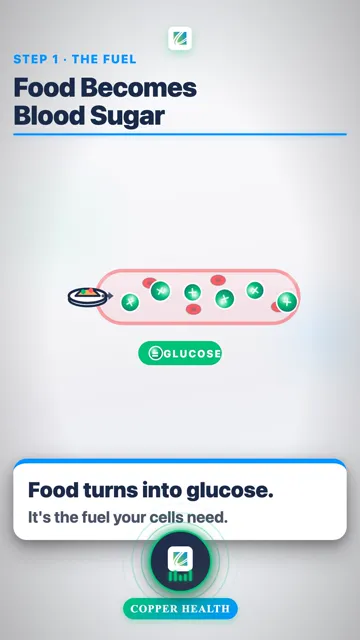
Food Becomes Blood Sugar
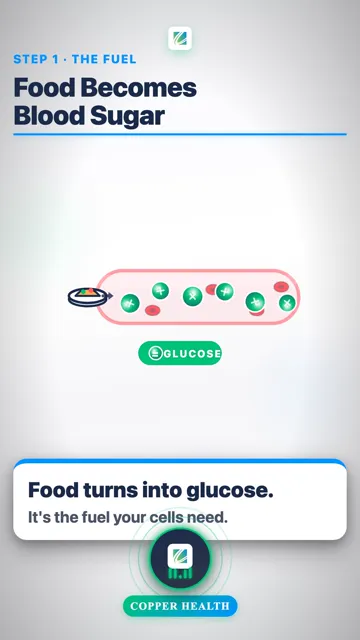
Let's start with food. When you eat, your body breaks it down into a sugar called glucose. It travels in your blood, so we call it blood sugar. It's the fuel your body runs on, so blood sugar isn't bad. You need it. The real question is, how does that sugar get into your cells? That's next.
Insulin Is the Key
Meet the helper: insulin. Think of it as a key that unlocks your cells.
The Key Opens the Door
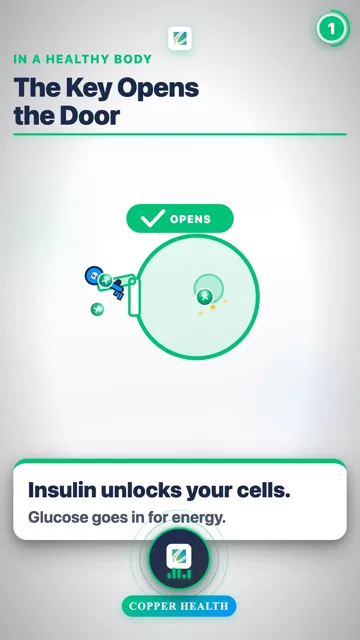
First, let's see this in a healthy body. Picture each cell with a locked door. When you eat, your body makes insulin, the key. The key fits the lock, the door opens, and sugar moves from your blood into the cell. The cell gets fuel, and your blood sugar settles back to steady. That's the normal cycle: eat, make insulin, unlock the cells, use the fuel. Hold that picture, because next we'll see what changes.
The Lock Gets Rusty
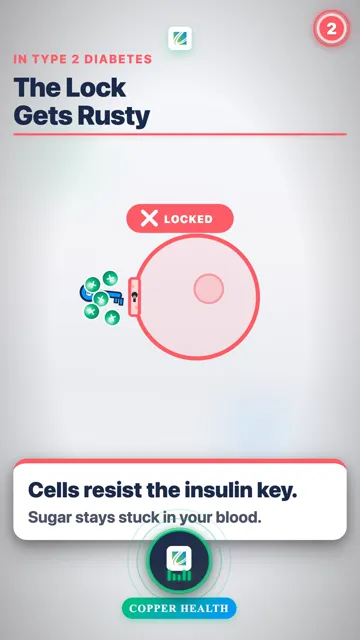
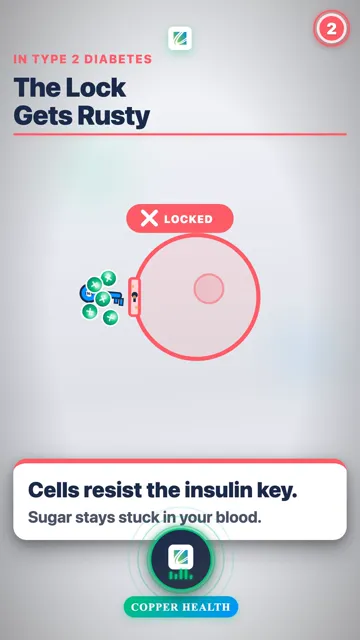
Now, here's what changes with Type 2 diabetes. Your body still makes the key. But over time, the locks on your cells get stiff and rusty, so the key doesn't turn easily. Doctors call this insulin resistance. The door won't open all the way, so the sugar can't get in. It stays stuck in your blood. Day after day, your blood sugar climbs higher. That's what we want to bring back down.
KEY INSIGHT
Here's the key insight. You can feel tired even with sugar in your blood, because that fuel is stuck outside your cells. It's like a full gas tank with a blocked fuel line. That's why managing your blood sugar can help you feel like yourself.
High Sugar Adds Up
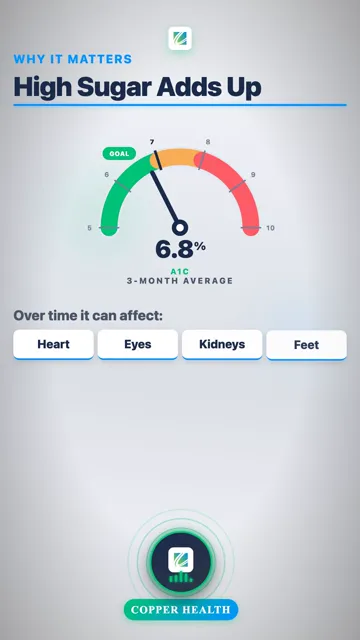
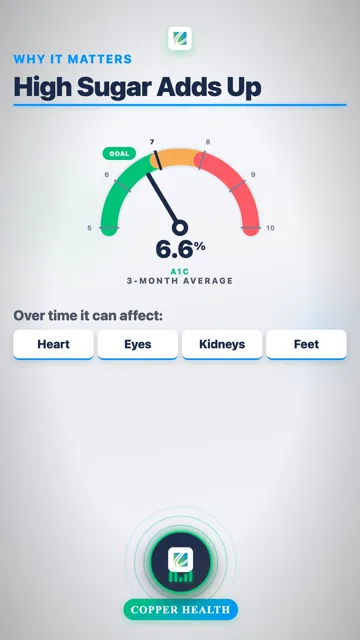
Why does this matter? Blood sugar left high too long can slowly wear on your body. Your doctor may check a test called A1C. Think of it as a three-month average of your blood sugar. There's a goal many people aim for, but yours may differ, so ask your doctor. Over time, high blood sugar can affect your heart, eyes, kidneys, and feet. The good part: keeping it steady helps protect them all.
Balance Is the Goal
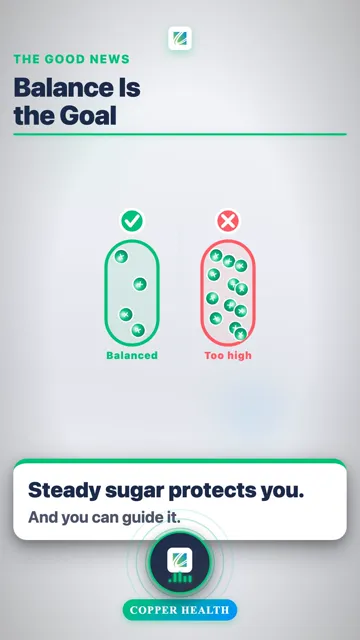
Now the good news. The goal isn't perfect, it's balance. Steady blood sugar, not too high, not too low. And here's the part: you can guide it. Your food, your movement, your medicines, all of it steers your blood sugar toward the middle. You have more say than you think.
Your Daily Toolkit
Your daily toolkit has four tools. Healthy eating. Staying active. Taking your medicines as your doctor directs. And checking your blood sugar. Each is a tool you already have. We'll cover them in this series.
REMEMBER
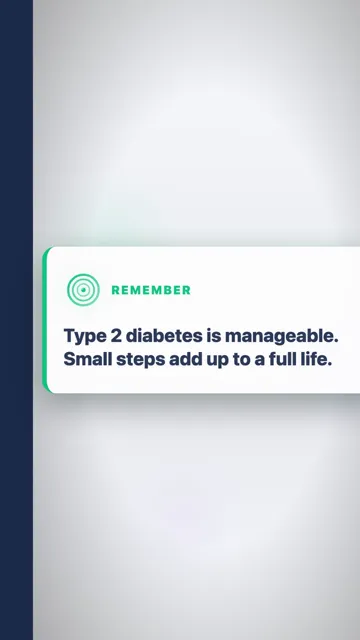
Remember this. Type 2 diabetes is manageable. You did not cause this, and you are not alone. Small steps, most days, add up to a full life.
Up next: your numbers
There's one number that tells you how you're doing each day, and it's the skill that puts you back in control. Want to learn to read it? That's next. Watch Blood Sugar Monitoring.
About this information
This information was created with AI assistance and is for educational purposes only. AI can make mistakes. Always follow your doctor's advice and consult your healthcare provider for medical decisions.