

Your blood sugar tells a story
Your blood sugar tells a story. Let's read it.
Blood Sugar Monitoring
Blood sugar monitoring. It's your daily skill for staying in control.
Why Monitor?
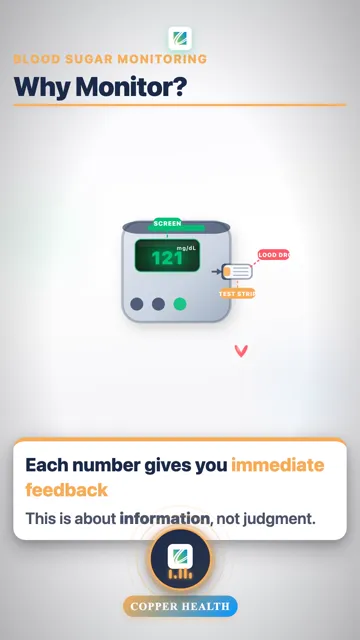
So why check your blood sugar? Because every number gives you honest feedback. It shows how your body handled your food, activity, and medicine. Those patterns, a little high after breakfast, a little low before dinner, tell you and your nurse what to change. A reading is information, not a grade. It's your body telling you what it needs.
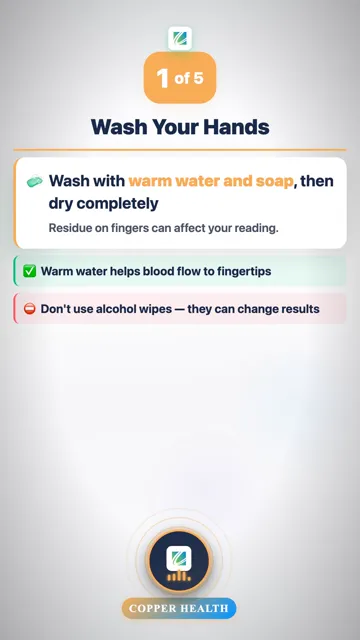
Wash Your Hands
Step one. Wash your hands. Use warm water and soap, then dry completely. Bits of food or lotion on a finger can change your reading. A tip. Warm water brings blood to your fingertips, so a drop forms easily. And don't use an alcohol wipe right before testing. It can dry the skin and change your result.
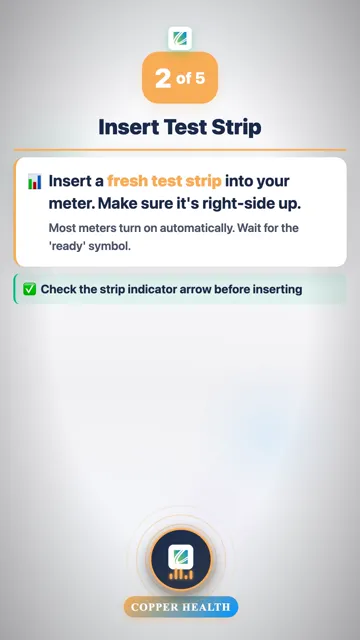
Insert Test Strip
Step two. Put in a fresh test strip. Slide a new strip into your meter, right-side up. Many strips have a little arrow that shows which way it goes, so check first. Most meters turn on by themselves when the strip goes in. Then wait for the "ready" symbol on the screen. Once it's ready, you're set.
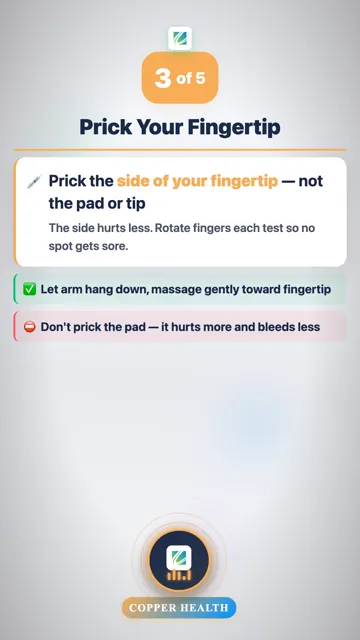
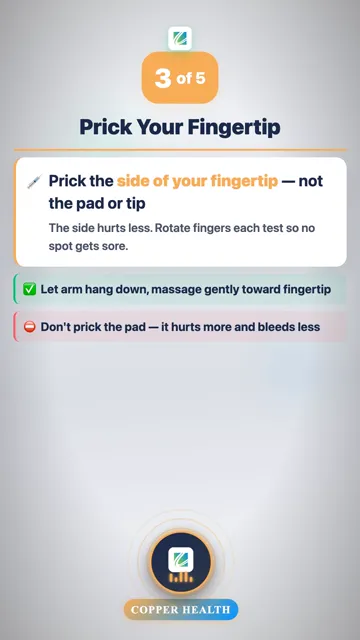
Prick Your Fingertip
Step three. Prick the side of your fingertip. The side, not the soft pad or the very tip. It has fewer nerve endings, so it hurts less and bleeds easier. A trick. Let your arm hang down, then massage toward your fingertip. And switch fingers each test, so no spot gets sore. It should feel like a small pinch. If it hurts, your nurse can set a gentler depth.
Touch Strip to Blood Drop
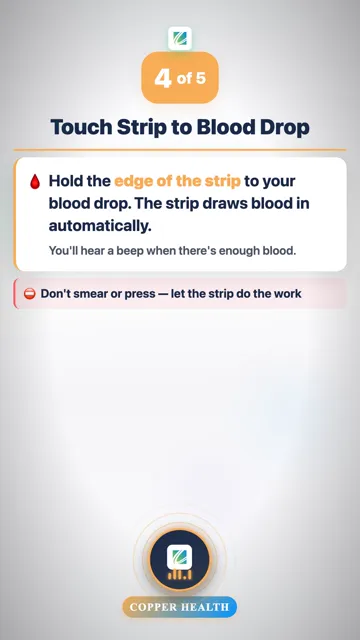
Step four. Touch the strip to your drop of blood. Once you have a small drop, hold the edge of the strip to it. The strip pulls the blood in on its own. So let the strip do the work. Don't smear or press it into your finger. You'll hear a beep when the meter has enough.
Read and Record
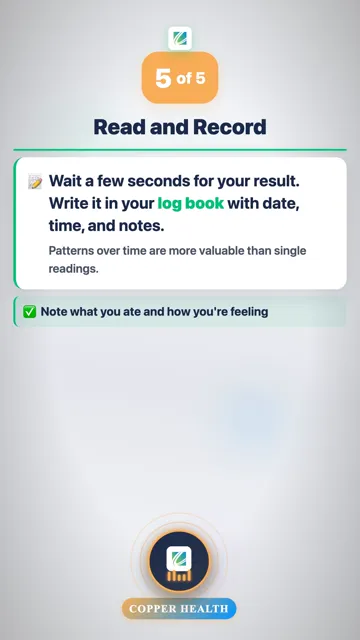
Step five. Read it, and write it down. Your number shows on the screen. Write it in your log book with the date, time, and a note on what you ate or feel. One reading is one moment. The pattern over weeks is what helps your nurse fine-tune your care.
Target Ranges
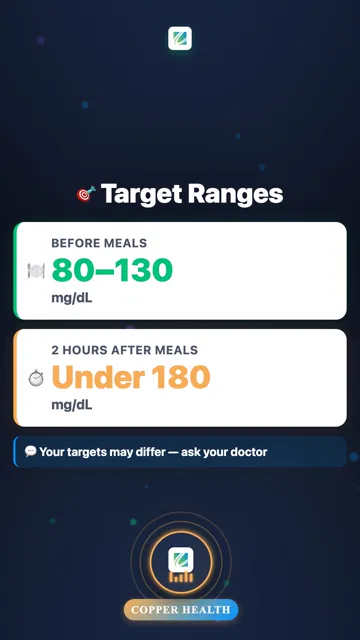
What are we aiming for? A common goal is eighty to one-thirty before meals, and under one-eighty about two hours after eating. Your targets may differ, so ask your doctor.
IMPORTANT
Something important. A high or low reading is not a failure. It's information. It tells you what to adjust. Don't let the numbers stress you. They help you learn.
When to Test
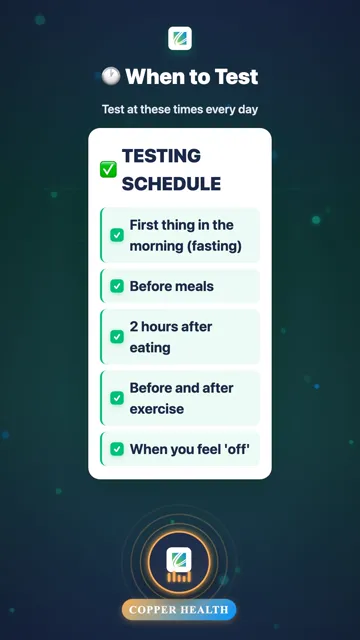
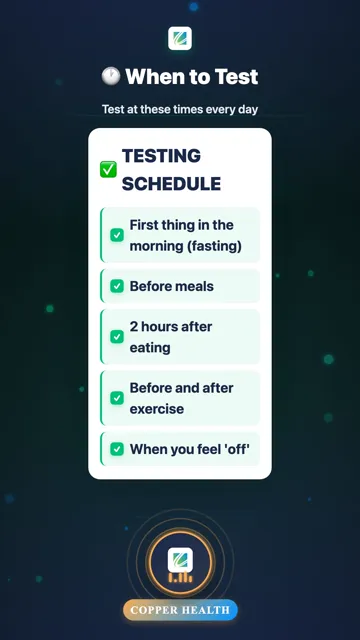
So when should you test? Your nurse will set a schedule that fits you, but here are common times. First thing in the morning, before you eat. That's a fasting check. Before your meals. And about two hours after eating. Around exercise too, before and after. And any time you feel "off," shaky, sweaty, or dizzy. When in doubt, test.
ACT IMMEDIATELY IF
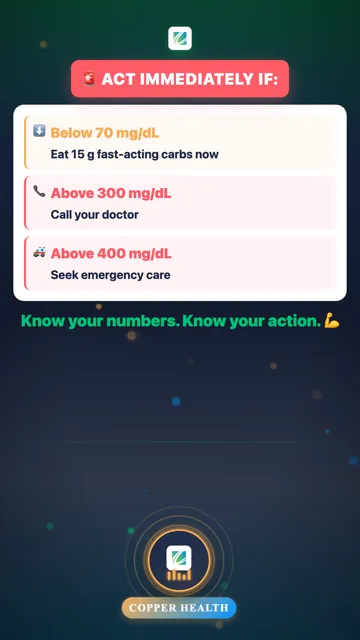
Now, emergencies. Below seventy is low blood sugar. Eat or drink fifteen grams of fast-acting sugar right away, like juice or glucose tablets, and follow your doctor's plan. Above three hundred, call your doctor. And above four hundred, get emergency care, don't wait. Know your numbers. Know your action.
HELPFUL TIP
A helpful tip. Share your blood sugar log with your doctor or nurse at every visit. The patterns they spot can lead to safer care.
REMEMBER
So remember this. Every test is a chance to learn. And checking regularly puts you, not your diabetes, in control.
Your meter reads 58
Now picture this. You check your blood sugar, and the meter reads fifty-eight. That's low. What do you do in the next fifteen minutes, before it drops further? Knowing the right steps can keep you safe in that moment. That's what we cover next. Watch Managing Low Blood Sugar.
About this information
This information was created with AI assistance and is for educational purposes only. AI can make mistakes. Always follow your doctor's advice and consult your healthcare provider for medical decisions.