


Your diabetes pills aren't all the same
Your diabetes pills aren't all the same.

Diabetes Medications
Today, let's look at your diabetes medicines, and what each one really does.

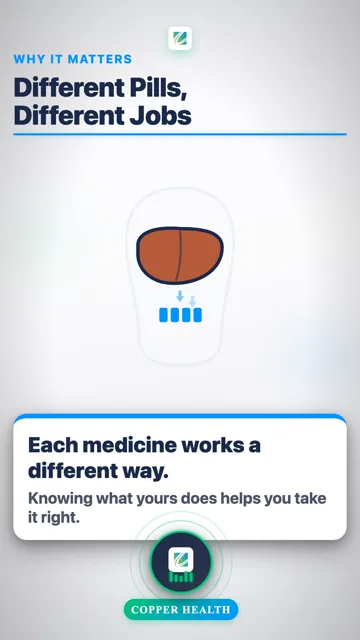
Different Pills, Different Jobs
Here's something many people don't know. Your diabetes medicines don't all work the same way. Each one has a different job inside your body. And here's why that matters. When you understand what your own medicine does, it's easier to take it right, at the right time. So let's walk through the common ones, one at a time.
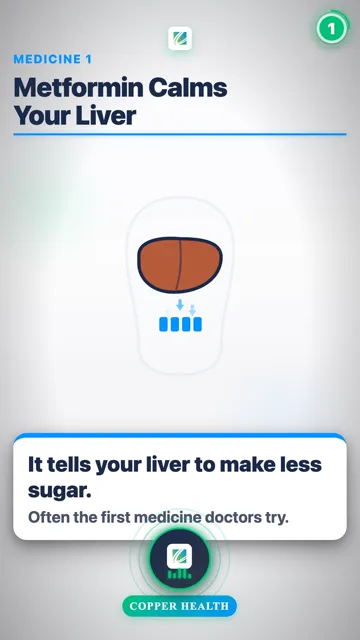
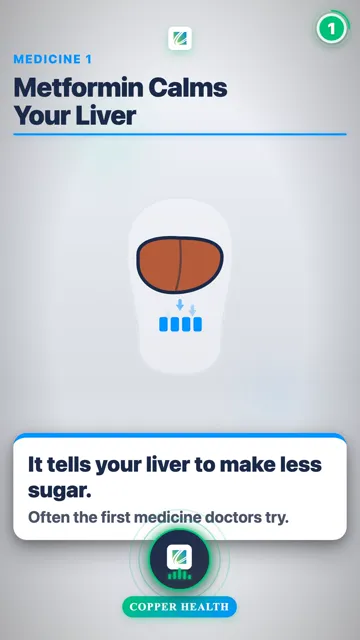
Metformin Calms Your Liver
Medicine one. Metformin. Your liver makes sugar, even between meals. With diabetes, it can make too much. Metformin tells your liver to ease off, and make less. Watch the dial wind down. Metformin is often the first medicine doctors try, if they think it's right for you. Always take it just the way your doctor prescribes.
Metformin Tip
A quick tip. Take it with food. It can ease the stomach upset some people feel at first. If it still bothers you, ask about the gentle, slow-release kind.
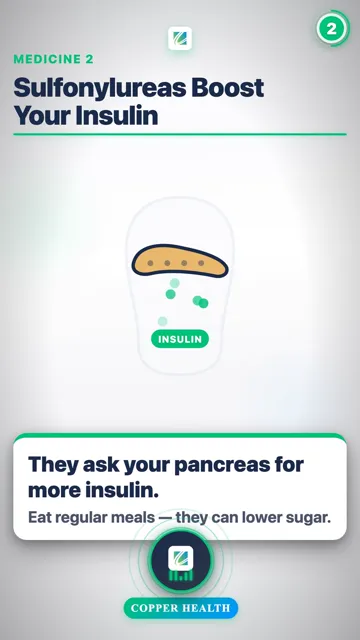
Sulfonylureas Boost Your Insulin
Medicine two. Sulfonylureas. A big word, but a simple job. These medicines ask your pancreas to make more insulin. More insulin helps move sugar out of your blood. One important thing. Because they push your insulin up, sulfonylureas can lower your blood sugar, sometimes too low. So if your doctor prescribes one, eat your regular meals, and don't skip them. We'll cover the signs of low blood sugar next.
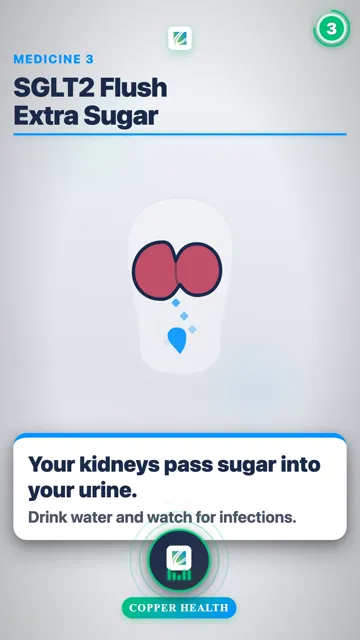
SGLT2 Flush Extra Sugar
Medicine three. The SGLT2 group. These work in a clever way. They tell your kidneys to pass extra sugar out of your body, in your urine. Less sugar in your blood, gone naturally. Two things to know if your doctor prescribes one. Drink plenty of water, so you don't get dried out. And watch for infections. If you notice one, tell your doctor or nurse.
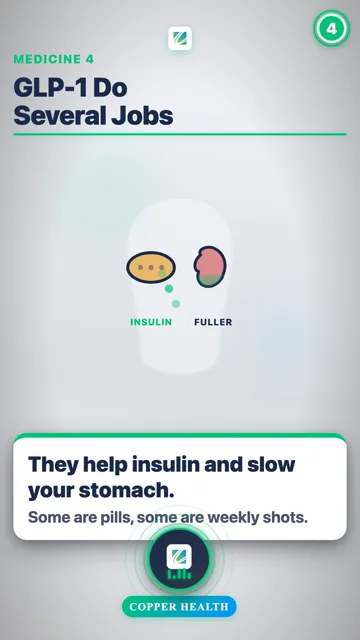
GLP-1 Do Several Jobs
Medicine four. The GLP-1 group. These are the multitaskers. They help your body make insulin when you need it. They slow your stomach, so you feel full longer. For many people, they help with weight. Some GLP-1 medicines are a daily pill. Others are a shot, often just once a week. If your doctor prescribes one, you may feel a little queasy at first, but that usually settles. As always, ask your pharmacist with questions.
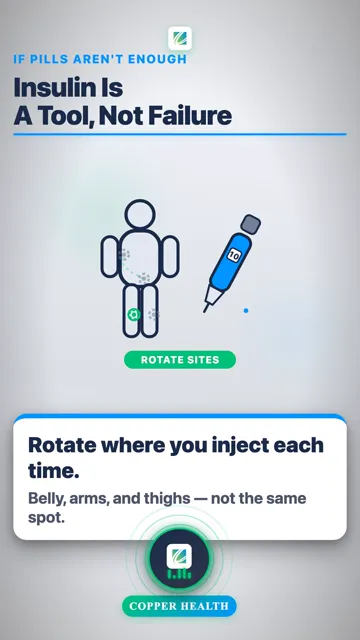
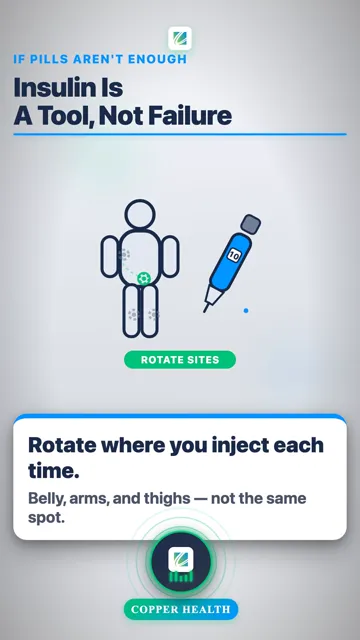
Insulin Is A Tool, Not Failure
And then there's insulin. If pills aren't quite enough, your doctor may add insulin. And hear this. Needing insulin is not a failure. It's just a tool for when your body needs more. If you use it, one key habit. Rotate where you give your shot. Move it around, the belly, the arms, the thighs. Don't use the same exact spot every time, or the skin can get lumpy.
Same Pills, Same Time
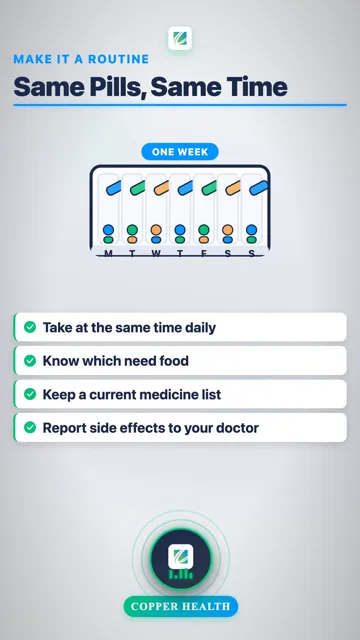
Whichever medicines you take, a routine makes them work best. Four simple habits. One. Take them at the same time each day. Two. Know which ones need food, and which don't. Three. Keep a current list of your medicines, and bring it to every visit. And four. If you notice a side effect, report it to your doctor. Don't just stop on your own.
Pick A Time, Stick To It
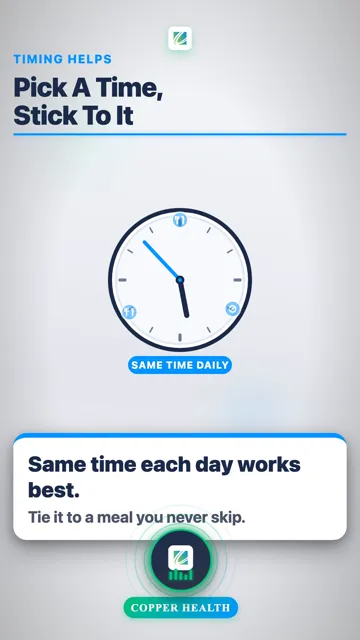
One easy trick for timing. Tie your medicine to something you already do, like a meal you never skip. Same time, every day.
DON'T SKIP DOSES
Here's the big one. Don't skip your doses. On a good day, you might feel fine and think about skipping. But please don't. Often, your medicine is the very reason you feel okay. If you ever want to stop or change a dose, ask your doctor first.
Up next: low blood sugar
Here's something every person on diabetes medicine needs to know. Some of these medicines can drop your blood sugar too low, and it can come on fast. Would you know the warning signs, and what to do in the moment? That's our next video. We'll show you how to spot low blood sugar fast, and treat it right. Watch it next.
About this information
This information was created with AI assistance and is for educational purposes only. AI can make mistakes. Always follow your doctor's advice and consult your healthcare provider for medical decisions.