

Feeling fine?
Feeling fine? That isn't proof it's okay.
Understanding High Blood Pressure
Let's make high blood pressure simple. Here's what your numbers really mean.
Pressure In Your Pipes
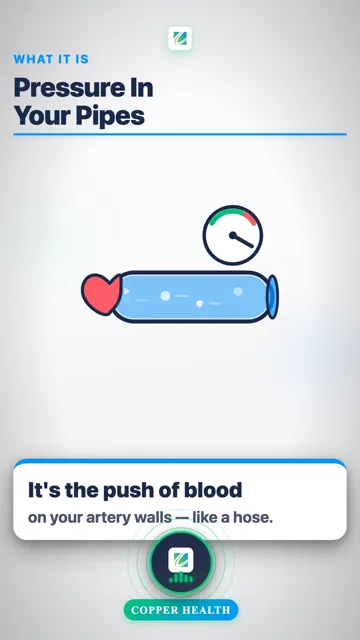
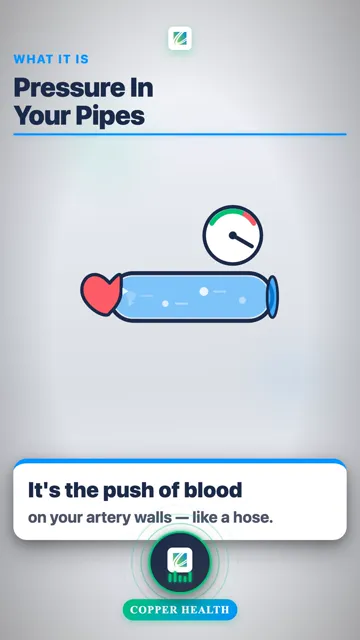
So what is blood pressure? Think of your blood like water moving through a hose. Your heart pumps blood through tubes called arteries. Blood pressure is the push of that blood on the walls. A gentle push is good. Too much push, for too long, is the problem. That's high blood pressure. And many people have it without ever knowing.
Two Numbers
Your reading has two numbers. A top one, and a bottom one. Here's what each one means.
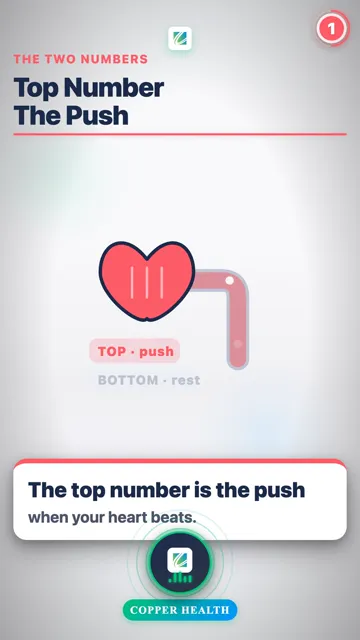
Top Number · The Push
First, the top number. The top number is the push when your heart beats. Your heart squeezes, and blood pushes out hard. That's the biggest push of all, so it's the bigger number. When people say their pressure is "high," it's often this top number. A lower top number usually means less strain on your heart.
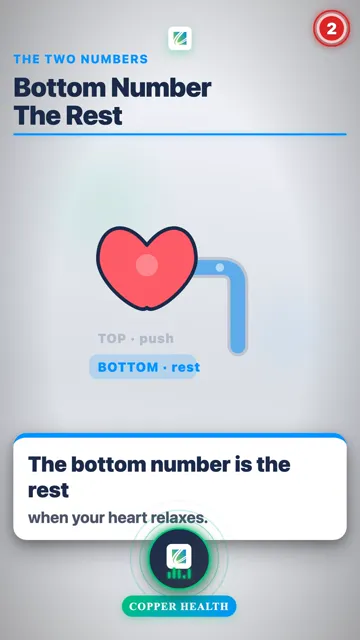
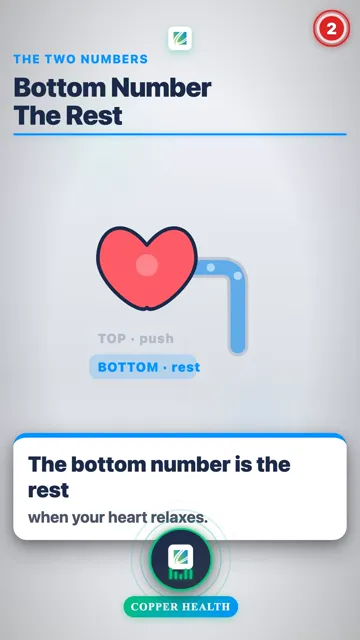
Bottom Number · The Rest
Now the bottom number. The bottom number is the rest, when your heart relaxes between beats. Even resting, there is still some push in the tubes. So the bottom number is smaller than the top. You will always see them written together — top, then bottom. Like one-twenty over eighty. Both numbers matter to your nurse.
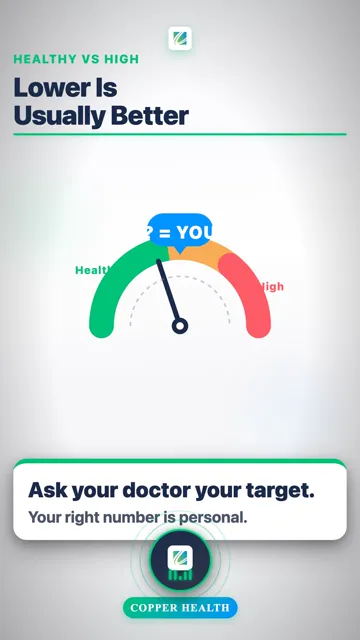
Lower Is Usually Better
So what numbers are healthy? In general, lower is usually better. But your right number is personal. It can depend on your age and your health. So here's the most important part. Ask your doctor or nurse for your target — the number that's right for you. And never change your blood pressure medicine on your own. If something worries you, call your nurse first.
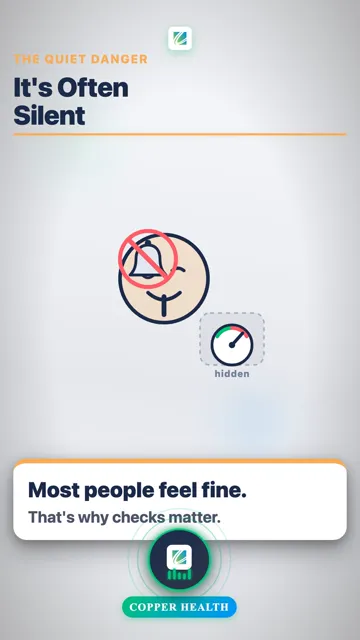
It's Often Silent
Here's the part that surprises people. High blood pressure often has no warning signs at all. Most people feel completely fine. That's why it's called the silent problem. You can't feel it. So the only way to know is to check.
It Can Harm 4 Areas
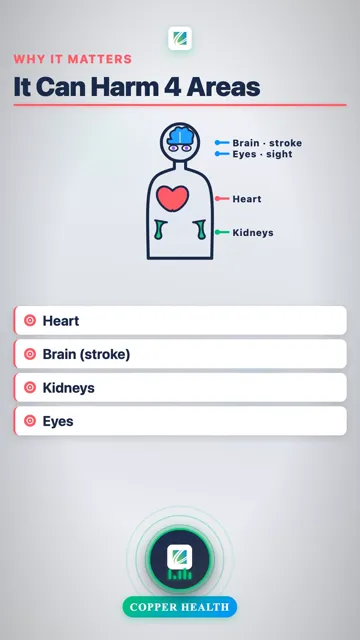
So why does this matter so much? Left high for years, that extra push can quietly harm four areas of your body. Your heart. Your brain — and that can lead to a stroke. Your kidneys. And your eyes. That's the reason we check, and we treat it. [teach-back pause — hold ~4s] Quick question — can you name the two numbers we just learned?
Ask your doctor your target number
Remember this one thing. Ask your doctor your target number. And don't change your medicines on your own.
Up next: how to lower it
Now you know what your numbers mean. But how do you bring a high number down? Simple steps that can help are next. Watch "Managing Blood Pressure."
About this information
This information was created with AI assistance and is for educational purposes only. AI can make mistakes. Always follow your doctor's advice and consult your healthcare provider for medical decisions.