

Could you spot a stroke?
Could you spot a stroke? In a minute, you'll know.
Understanding Stroke / Time is brain
This is stroke, explained simply. Remember three words. Time is brain.
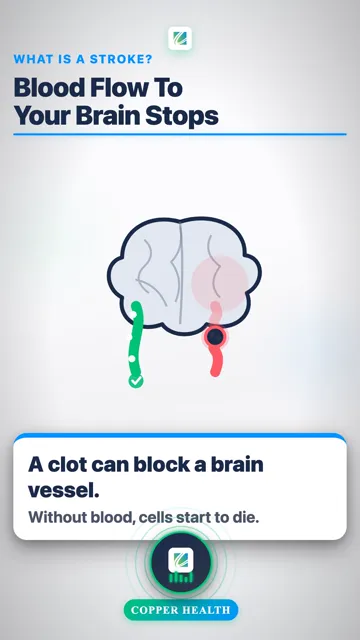
Blood Flow To Your Brain Stops
So, what is a stroke? Your brain needs a steady flow of blood. In a stroke, that flow suddenly stops. Most often, a clot blocks a brain vessel. Without blood, brain cells start to die, fast. That is why a stroke is an emergency. The good news? Act quickly, and you can save a lot of the brain.
FAST
Here is the one word to remember. FAST. It stands for Face, Arms, Speech, and Time to call 911. Let me show you.
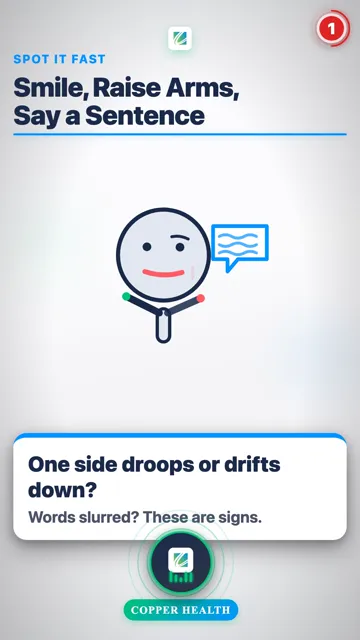
Smile, Raise Arms, Say a Sentence
Three quick checks, in seconds. First, the face. Ask the person to smile. Does one side droop? Next, the arms. Ask them to raise both arms. Does one arm drift down? Then, speech. Ask them to say a simple sentence. Are the words slurred or strange? A droop, a drift, or slurred speech. Any one of these can be a sign of a stroke.
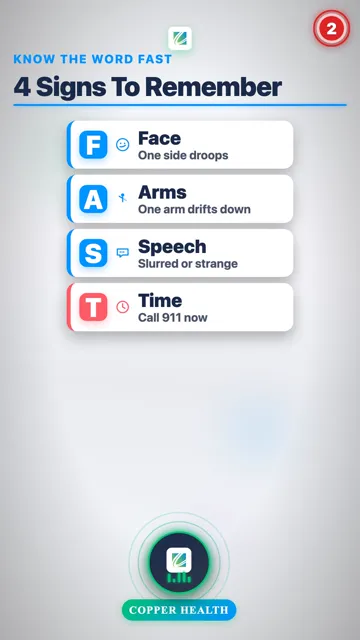
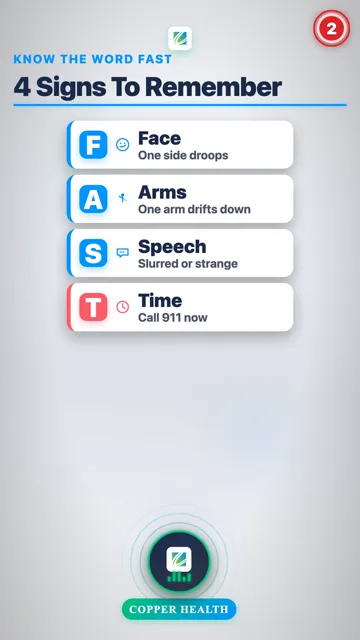
4 Signs To Remember
Let's put it together so it sticks. FAST. F is for Face. Look for one-sided drooping. A is for Arms. Watch for one arm that drifts or feels weak. S is for Speech. Listen for slurred or strange words. And T is for Time. If you see even one of these signs, it is time to call 911, right away.
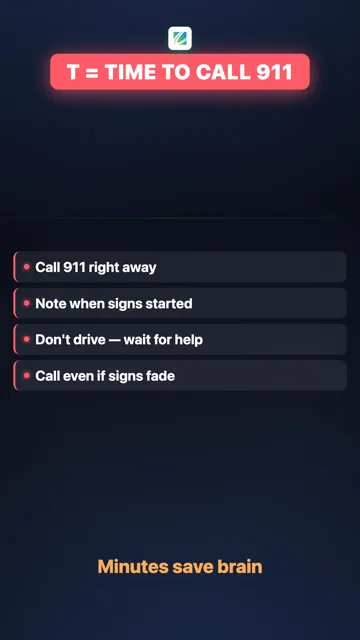
T = TIME TO CALL 911
This is the most important part. If you see stroke signs, call 911 right away. Note the time the signs started — the team will need it. Don't drive to the hospital yourself. Wait for help. And call even if the signs fade. Minutes save brain.
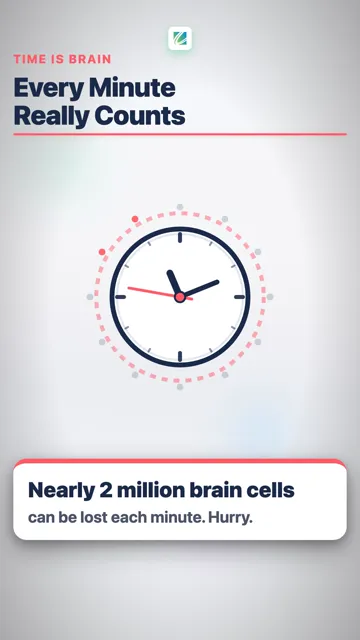
Every Minute Really Counts
Why the urgency? During a stroke, nearly two million brain cells can be lost each minute that blood flow is blocked. That is why we say, time is brain. The sooner help starts, the more of your brain can be saved. So please, never wait.
Don't Wait It Out
One more thing. Sometimes stroke signs appear, then fade away. This can be a mini-stroke. It may be a warning that a bigger stroke is coming. So even if the signs go away, call your doctor right away.
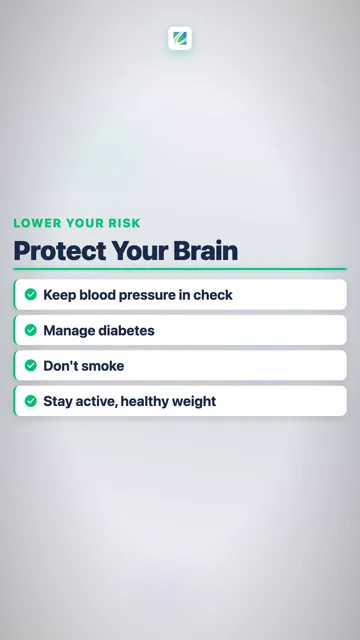
Protect Your Brain
Now, the hopeful part. You can lower your risk of a stroke. Keep your blood pressure in check — that one matters most. If you have diabetes, work with your doctor to manage it. Don't smoke. And stay active and keep a healthy weight. Small, steady habits protect your brain.
What happens next?
But what happens after a stroke? Here's the hopeful part — your brain can rewire and heal. We'll show you how, next.
About this information
This information was created with AI assistance and is for educational purposes only. AI can make mistakes. Always follow your doctor's advice and consult your healthcare provider for medical decisions.