


Thinking feels foggy?
Does your thinking feel foggy? After a stroke, that's common.

Memory & Thinking After Stroke
Let's talk memory and thinking after a stroke, and ways to cope.

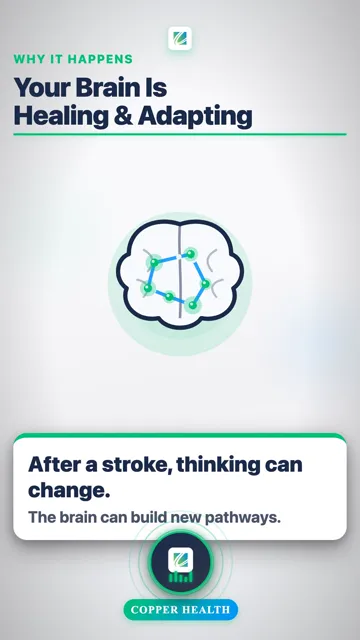
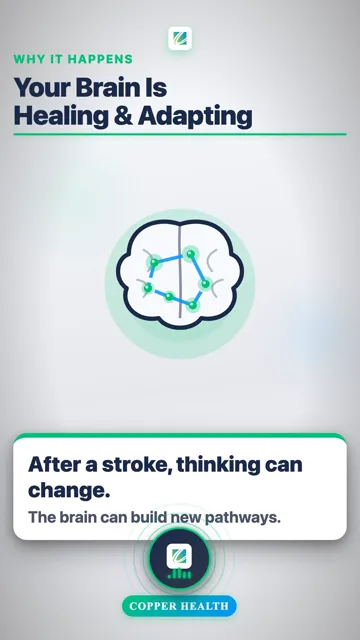
Your Brain Is Healing & Adapting
A stroke can change how you think, not just how you move. You might notice your memory, focus, or finding words. This is real, and it is not your fault. But here is the hopeful part. Your brain is healing. With time and practice, it can build new pathways and find new ways to work. Let's see what you may notice.
Common Changes
First, the common changes. You are not alone in this.
What You May Notice
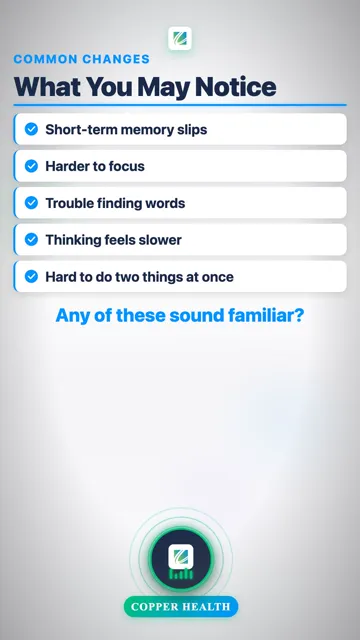
So, what might you notice? You may have short-term memory slips, like forgetting why you walked into a room. It may be harder to focus. You may have trouble finding the right word. Your thinking may feel slower than before. And doing two things at once can feel hard. Do any of these sound familiar? If so, that's okay. These changes are common, and there are ways to help.
GOOD NEWS
Now, the good news. With time and practice, your brain can build new pathways. A strategy that feels awkward today can become second nature. Keep going.

Memory Aids
Next, memory aids. Let tools do the remembering for you.

Tools Do the Work
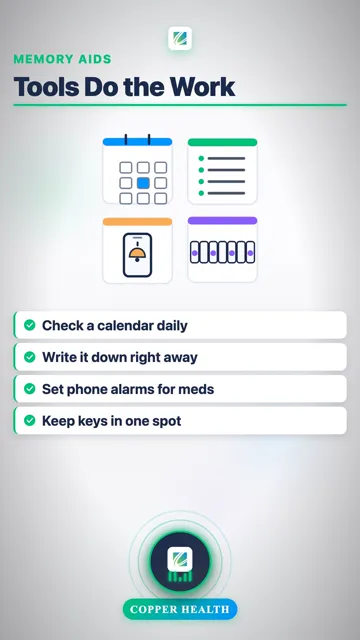
Here is a simple idea. Don't try to hold everything in your head. Let tools do the work. Check a calendar every day, so you always know the date and your plans. When something comes up, write it down right away. Keep a notepad or your phone handy. Set alarms on your phone to remind you to take your medicine. And give important things a home. Keep your keys in one spot, every time. These small habits take the pressure off, so you can relax.
Same Steps, Same Times
A steady routine is one of your best tools. When you do the same things, in the same order, at the same times, your brain has less to figure out. Morning, meals, and medicine can follow a simple pattern. And be patient with yourself. Allow extra time. Take one step at a time, and finish one task before you start the next.

Common, Or Worth Reporting?
How do you know what's worth reporting? Slow, steady progress is common. Some days are better than others. Keep going. But watch for changes that are new, sudden, or getting worse fast. A big jump in confusion. A new problem you didn't have before. If that happens, do not wait. Tell your doctor, nurse, or care team. They can help.

ASK YOUR TEAM
One more tip. If thinking changes are making daily life hard, ask about cognitive rehab. A speech or occupational therapist can teach skills made just for you.
Caring for a loved one?
Now, what if the person facing these changes is someone you love? Caring for them at home can feel overwhelming. Up next, we make dementia care simpler. Watch next.
About this information
This information was created with AI assistance and is for educational purposes only. AI can make mistakes. Always follow your doctor's advice and consult your healthcare provider for medical decisions.