

Eating less lately?
Eating less lately? Your body may not be asking.
Nutrition and Hydration
Today, simple food and water habits that help you age well.
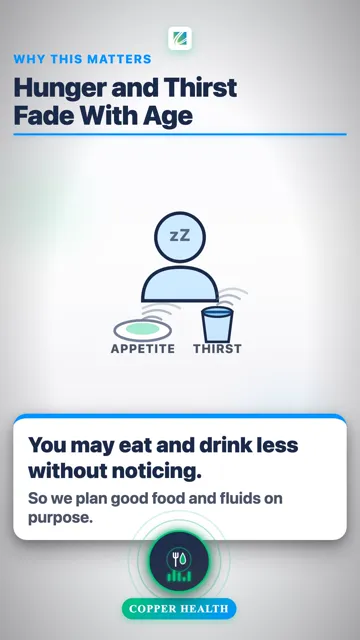
Hunger and Thirst Fade With Age
Here's something many people don't know. As we get older, both hunger and the sense of thirst often fade. So you can eat less, and drink less, without noticing it. The good news? With a few simple habits, you can plan good food and fluids on purpose — and feel stronger for it.
Protein Protects Your Muscle
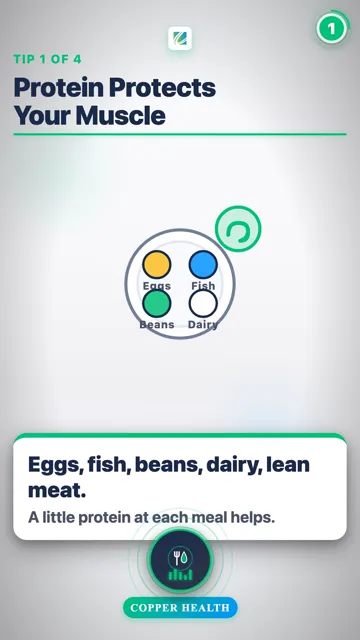
Tip one. Eat enough protein. Protein helps protect your muscle and your strength as you age. Good choices are eggs, fish, beans, dairy, and lean meat. Try to include a little protein at each meal. Your provider can tell you how much is right for you.
Calcium and Vitamin D for Strong Bones
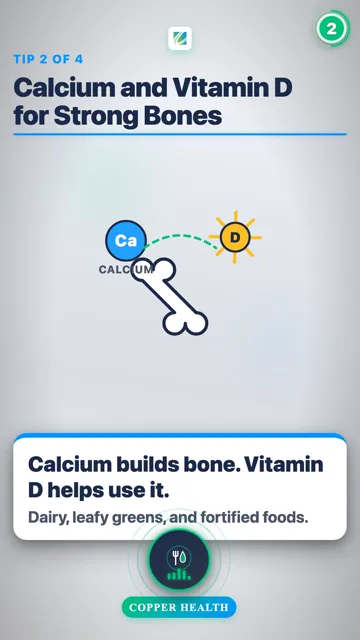
Tip two. Calcium and vitamin D for your bones. Calcium helps build strong bone, and vitamin D helps your body actually use that calcium. You'll find them in dairy, leafy greens, and fortified foods. Ask your provider before starting any supplement.
Color Your Plate for Fiber
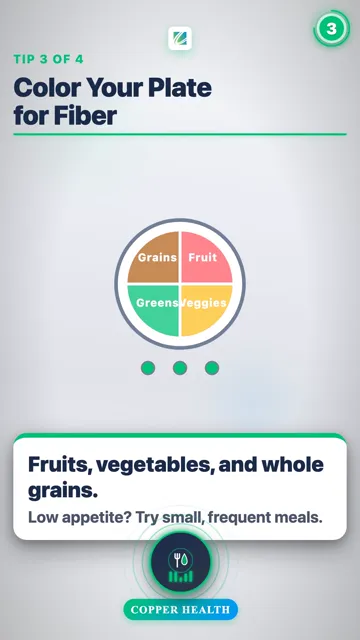
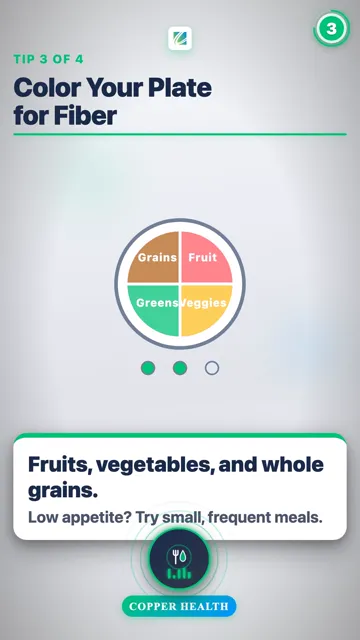
Tip three. Color your plate. Brightly colored fruits and vegetables, plus whole grains, give you fiber. Fiber keeps your bowels regular. And if your appetite is low, don't force three big meals. Instead, try small, frequent meals through the day, and choose foods that are soft and easy to chew.
Sip Fluids Through the Day
Tip four. Sip fluids all through the day. Because thirst fades with age, waiting until you feel thirsty is waiting too long. So don't rely on thirst alone. Keep a cup of water nearby and take small sips often.
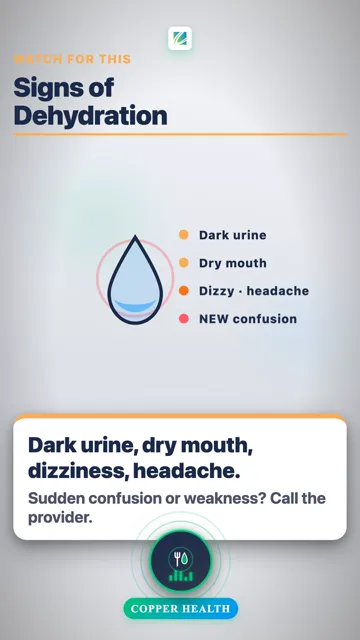
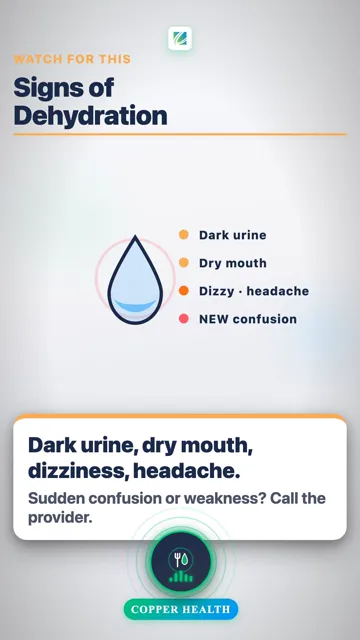
Signs of Dehydration
Now, an important safety point. Dehydration is common in older adults, and it can be dangerous. Watch for dark urine, a dry mouth, dizziness, and headache. And here's the big one. Dehydration in older adults can cause dizziness, confusion, and falls. If someone suddenly seems confused or very weak, get fluids and call the provider.
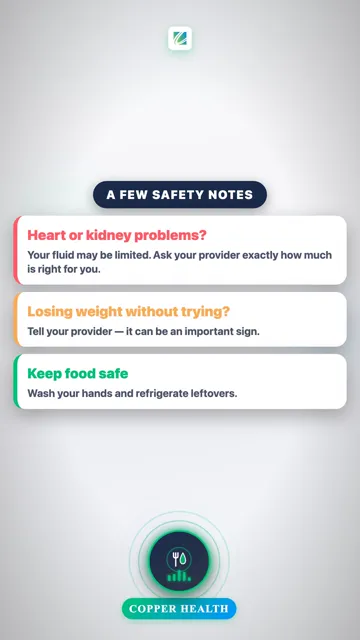
A Few Safety Notes
A few quick safety notes. If you have heart or kidney problems, your fluid may be limited — ask your provider exactly how much is right for you, instead of following a general number. If you're losing weight without trying, tell your provider. And keep food safe — wash your hands and refrigerate leftovers.
Can You Name Them?
Before we finish — can you name three habits? Eat well, sip often, and know the signs of dehydration.
Next: the first sign of a UTI
Staying hydrated also helps prevent infections. Next, the surprising first sign of a UTI.
About this information
This information was created with AI assistance and is for educational purposes only. AI can make mistakes. Always follow your doctor's advice and consult your healthcare provider for medical decisions.