

Stiff, achy joints?
Stiff, achy joints? The fix may surprise you.
Understanding Osteoarthritis
Let's talk about osteoarthritis — and why movement is medicine.
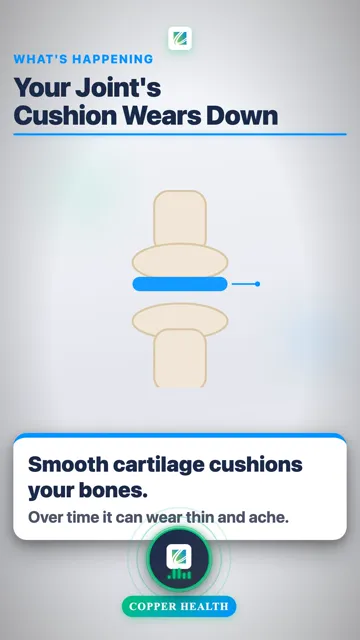
Your Joint's Cushion Wears Down
Osteoarthritis is the most common kind of arthritis, often called wear-and-tear. Inside each joint, a smooth, slippery cushion covers the ends of your bones, so they glide easily. Over the years, that cushion can wear thin. When it does, the bones rub more, and the joint can hurt, stiffen, and swell — most often in the knees, hips, hands, and spine.
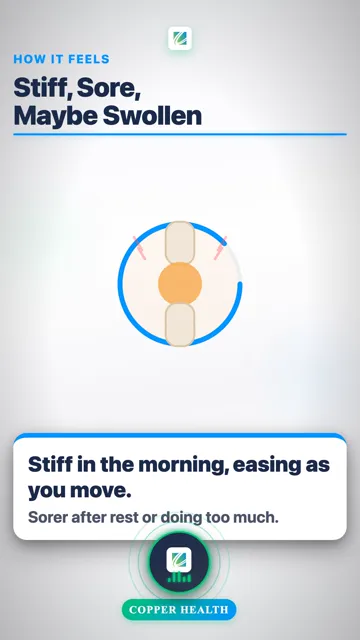
Stiff, Sore, Maybe Swollen
So how does it feel? Many people feel stiff in the morning, or after sitting a while — and it eases up as they start to move. The joint may ache more after rest, or after you've done too much. You might notice some swelling, too.
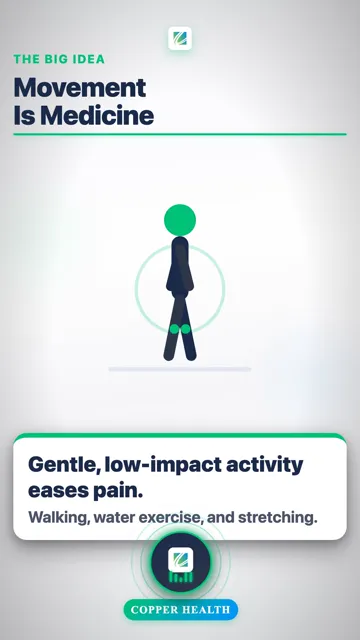
Movement Is Medicine
Here's the big idea — and it surprises a lot of people. When a joint hurts, it's tempting to rest it and stop moving. But for osteoarthritis, gentle movement is medicine. Low-impact activity keeps your joints flexible, builds the muscles around them, and can actually ease the pain over time. Think walking, exercising in water, and easy stretching — going at your own pace.
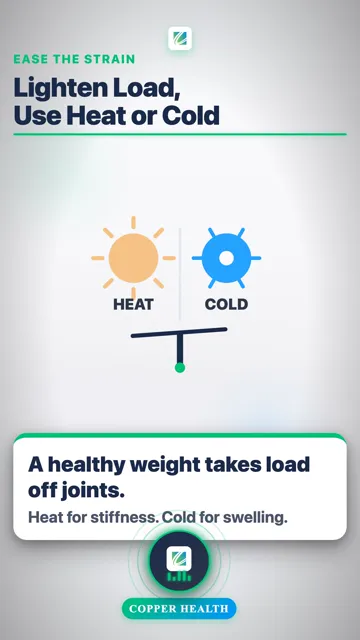
Lighten Load, Use Heat or Cold
A few simple things can take the strain off. If it fits your health, reaching a healthy weight lifts a real load off your knees and hips. And use temperature to help. Warmth, like a warm shower or a heating pad on low, can loosen a stiff joint. Cold, like an ice pack, can calm down swelling.
Protect Your Joints Each Day
You can also protect your joints by working smarter, not harder. Helpful tools take the pressure off — a cane to steady your walking, a jar opener for tight lids, grab bars in the bathroom. And pace yourself. Spread heavy tasks through the day, and rest when your body asks for it.
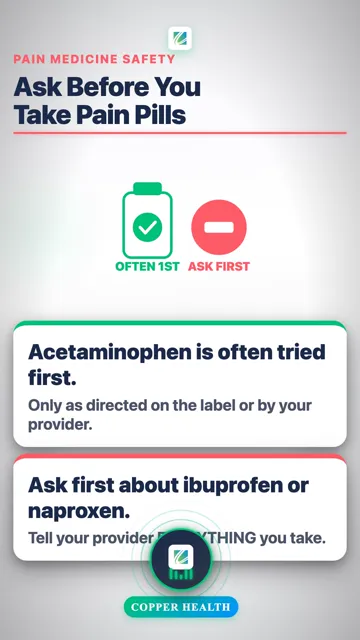
Ask Before You Take Pain Pills
Now, about pain medicine — please be careful here. For pain, acetaminophen is often tried first. Talk to your provider or pharmacist before taking anti-inflammatory pills like ibuprofen or naproxen regularly. In older adults, they can affect the kidneys, stomach, blood pressure, and react with blood thinners. Never take more pain medicine than the label or your provider says. And tell your provider about everything you take, including over-the-counter pills and supplements.
Can You Name One Way to Help Your Joints?
Before we finish — can you name one way to help your joints? Keep moving. Use heat or cold. And ask before new pain pills.
Next: protect your bones
Healthy joints sit on healthy bones. Next, protecting your bones from fractures. Watch next.
About this information
This information was created with AI assistance and is for educational purposes only. AI can make mistakes. Always follow your doctor's advice and consult your healthcare provider for medical decisions.