


Two techniques. Instant relief.
When COPD steals your breath, two simple techniques can help.

Breathing Exercises
These are breathing exercises that actually work. Let's learn them together.
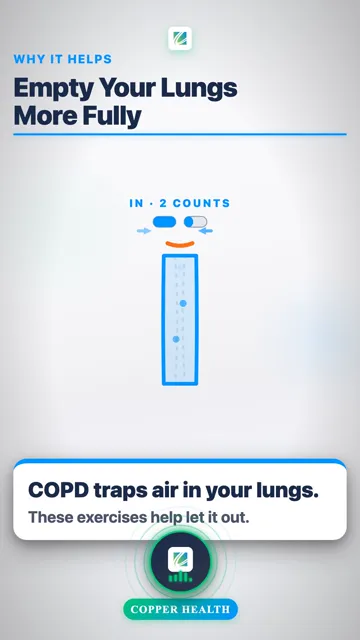
Empty Your Lungs More Fully
First, why does this even help? With COPD, old air gets trapped in your lungs, and that crowds out the fresh air you need. These two exercises help you push more of that stale air out, and slow your breathing down so it feels calmer. One quick note. These help, but they don't replace your medicines or your doctor's care. They work alongside them.
Pursed-Lip Breathing
Technique one. Pursed-lip breathing. This is your go-to whenever you feel short of breath.
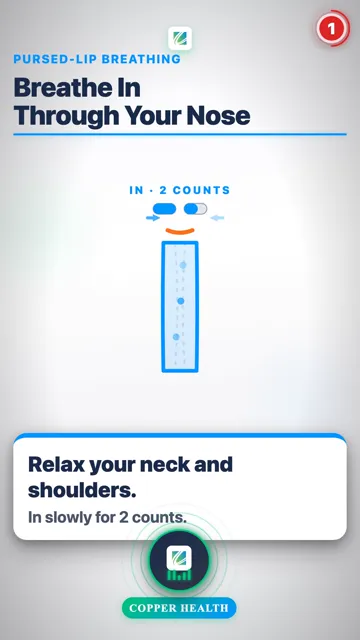
Breathe In Through Your Nose
Let's do it together. First, relax. Drop your shoulders, loosen your neck. Now breathe in slowly through your nose, for two counts. Like this. [breathe along: in, 2 counts] Nice and easy, no need to fill all the way up. Let's try once more. In through the nose. [breathe along: in, 2 counts]
Breathe Out Through Pursed Lips
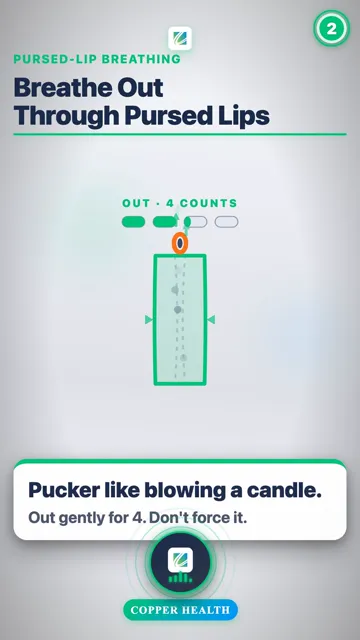
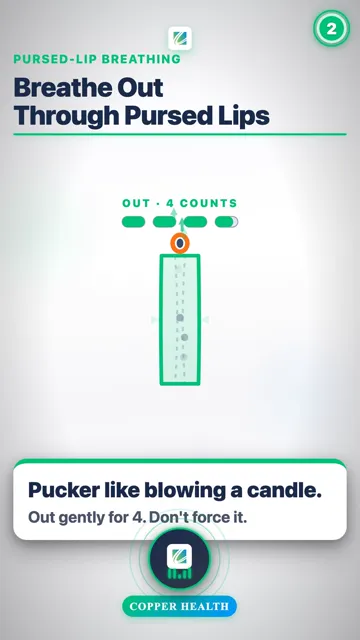
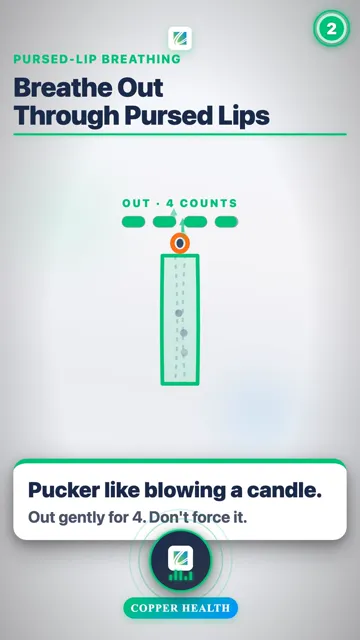
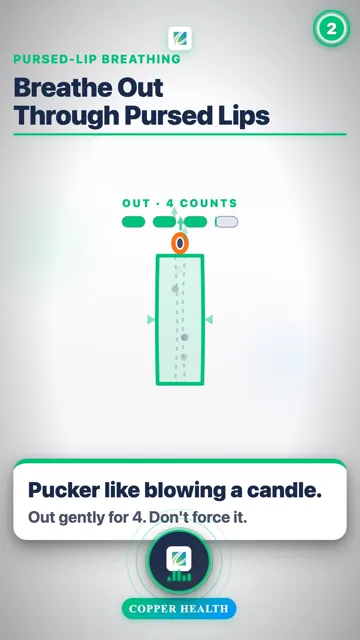
Now the important half, the breath out. Pucker your lips, like you're gently blowing out a candle. Breathe out slowly through those pursed lips, for four counts. Twice as long as your breath in. [breathe along: out, 4 counts] Don't force it. Let the air drift out on its own. Let's put it together. In through the nose, two. [breathe along: in, 2] Out through pursed lips, four. [breathe along: out, 4]
Why It Works
Why does the long, pursed breath out work? It adds a little gentle back-pressure. That can hold your airways open longer, so more trapped air escapes.
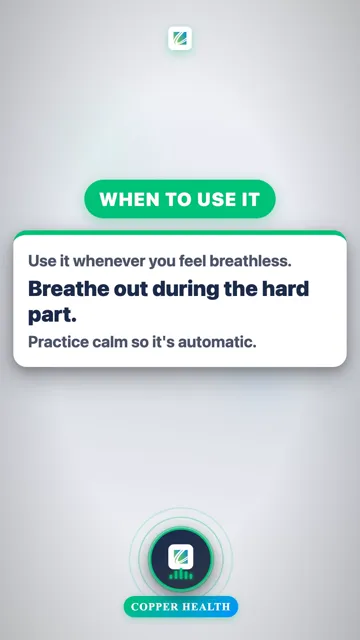
When To Use It
When should you use it? Anytime you feel breathless, climbing stairs, walking, or carrying something. Breathe out slowly during the hard part. And practice when you're calm, so it becomes automatic when you really need it. Slow breathing also signals your body it's safe to slow down.
Belly Breathing
Technique two. Belly breathing. This one strengthens your diaphragm, the main muscle that powers your breathing.
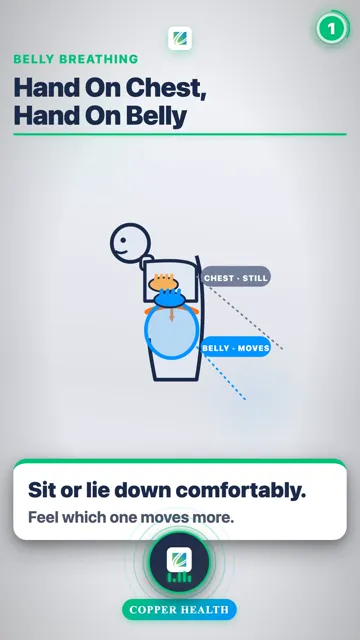
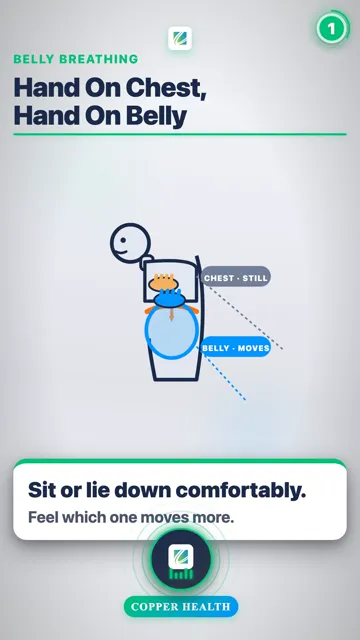
Hand On Chest, Hand On Belly
Let's set up. Sit back or lie down, somewhere comfortable. Put one hand on your chest, and the other hand on your belly. Breathe normally for a moment, and just notice. Which hand moves more, the one on your chest, or the one on your belly? For most of us, it's the chest. We're about to change that.
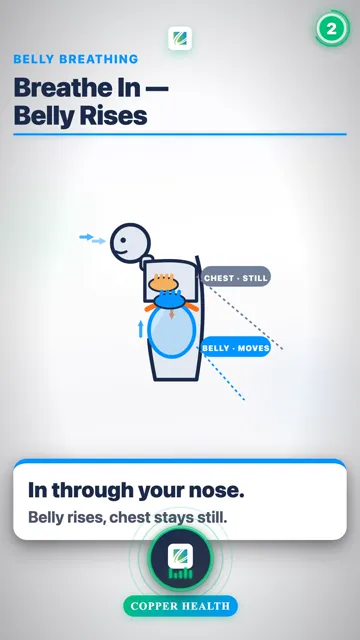
Breathe In — Belly Rises
Now, breathe in slowly through your nose. This time, send the air down low, so your belly rises up into your hand. [breathe along: in, belly rises] Your chest hand should stay almost still. It's the belly hand that moves. Let's try again. Breathe in, and feel the belly rise. [breathe along: in, belly rises]
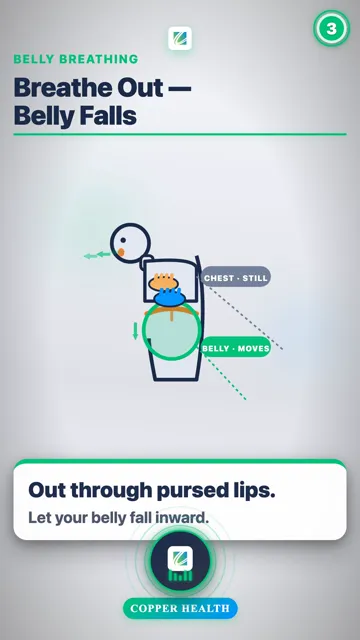
Breathe Out — Belly Falls
Now breathe out, through pursed lips again, slow and steady. As you do, gently tighten your stomach and let your belly fall inward. [breathe along: out, belly falls] That's it. Belly up as you breathe in, belly down as you breathe out. Slow, deep, and calm. [breathe along: out, belly falls]
A Little, Often
So how often? A little, often, works best. For belly breathing, aim for five to ten minutes, about three times a day. For pursed-lip breathing, use it during your activities, and anytime you feel short of breath. The more you practice calm, the more it's there when you need it.
Remember
Quick recap. Which one is for fast relief? Pursed-lip, for quick relief. Belly breathing, for lasting strength. Use both, every day.
But what if it gets worse?
But what if your breathing gets worse anyway? You'll want to know your move before that happens. Watch next.
About this information
This information was created with AI assistance and is for educational purposes only. AI can make mistakes. Always follow your doctor's advice and consult your healthcare provider for medical decisions.