

Oxygen isn't addictive.
Oxygen isn't addictive. But these safety rules are critical.
Oxygen Therapy Basics
Today, the basics of using your oxygen safely, and getting the most from it.
Your lungs need a little help
If your doctor prescribed oxygen, it's because your lungs need a little help. The air around us is about twenty-one percent oxygen. When your levels run low, extra oxygen gives your body what it needs to work well. Now, here's the worry many people have. They think they'll get hooked on it. So let's be clear. Oxygen is not addictive. Your body simply needs it, the same way it needs food and water.
Critical Rule
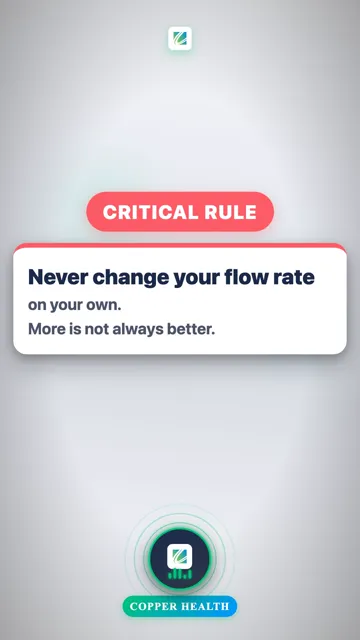
Here's the one rule to never break. Never change your flow rate on your own. Your doctor set it just for you. And more is not always better.
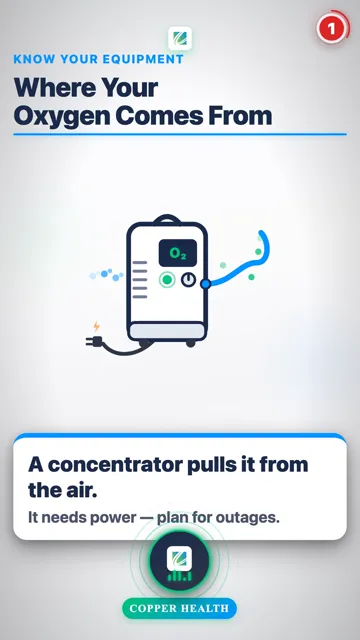
Where Your Oxygen Comes From
Let's get to know your equipment. Most people use a machine called a concentrator. It pulls oxygen right out of the room air and sends it to you, around the clock. But here's the important part. A concentrator runs on electricity. So you need a backup plan for a power outage. Keep a spare oxygen tank nearby, and ask your supplier what to do if the power goes out.
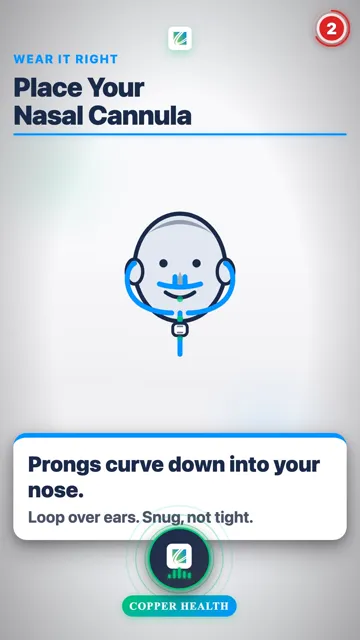
Place Your Nasal Cannula
Next, wearing the little tube, called a nasal cannula, the right way. The two soft prongs should curve down, gently into your nose. Then loop the tubing up and over each ear. Slide the piece under your chin until it feels snug, but not tight. If your ears get sore, that's common — soft foam cushions can help.
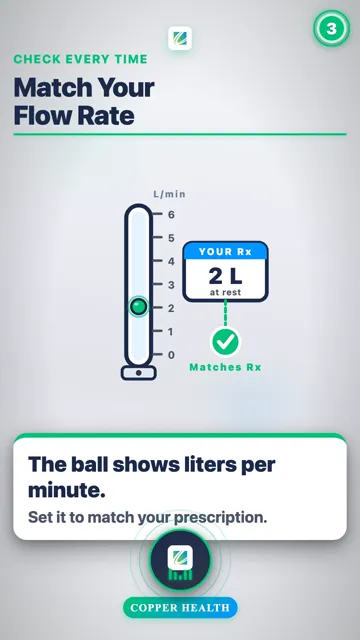
Match Your Flow Rate
Third, check your flow rate every single time. Look at the little gauge. You'll see a small ball that floats up and down. The number it lines up with is your flow rate, measured in liters per minute. Make sure that number matches what your doctor prescribed for you. If it ever looks off, don't guess — call your supplier or your nurse.
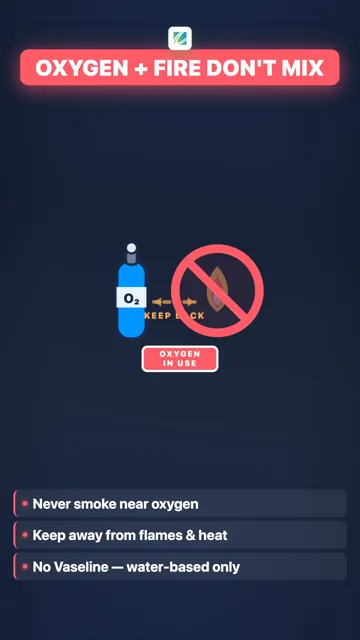
OXYGEN + FIRE DON'T MIX
Now the most important safety message. Oxygen and fire don't mix. Oxygen makes any flame burn faster and hotter. So never smoke, and never let anyone smoke, near your oxygen. Keep it well away from any flame or heat — candles, gas stoves, fireplaces. And don't put Vaseline on your nose or lips. Use a water-based product instead.
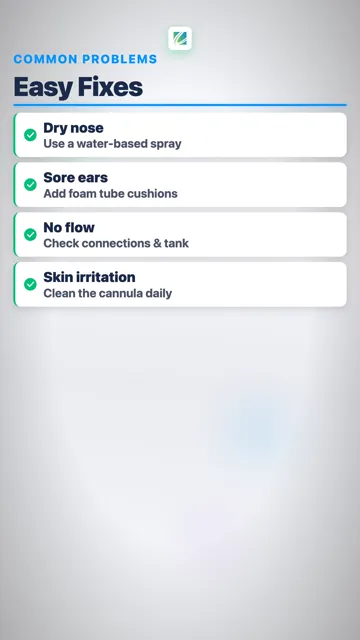
Easy Fixes
Most everyday problems have an easy fix. Dry nose? Try a water-based spray or gel — never an oily one. Sore ears? Add soft foam cushions to the tubing. No oxygen flowing? Check that every connection is tight, and that your tank isn't empty. And if your skin gets irritated, clean your cannula daily. If a problem keeps up, call your supplier.
Don't stay housebound
Here's some good news. Oxygen should not keep you stuck at home. If your doctor prescribed it, use your oxygen during activity and even while you sleep. And ask about a portable system. Small, lightweight tanks let you run errands, visit friends, and even travel. Keep living your life.

Helpful Tip
Here's a helpful tip. Save your oxygen supplier's number in your phone today. Most can help you any hour, day or night.

Remember
So, can you name the two big rules? Use your prescribed rate only. And keep flames far away. Oxygen helps you live better — so use it.
Up next: COPD flare-ups
Up next, something every person with COPD should know. Your body gives an early warning before a flare-up turns into an emergency. Most people miss it. Want to know the three signs to watch for? Watch next.
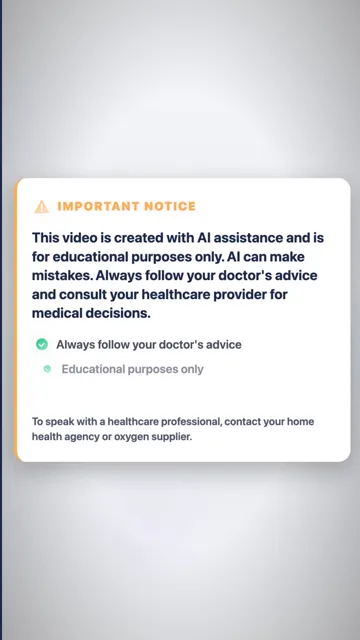
About this information
This information was created with AI assistance and is for educational purposes only. AI can make mistakes. Always follow your doctor's advice and consult your healthcare provider for medical decisions.