

Exercise with COPD?
Exercise, with COPD? It can make breathing easier.
Staying Active with COPD
Today, safe, simple movement that helps your lungs work better.
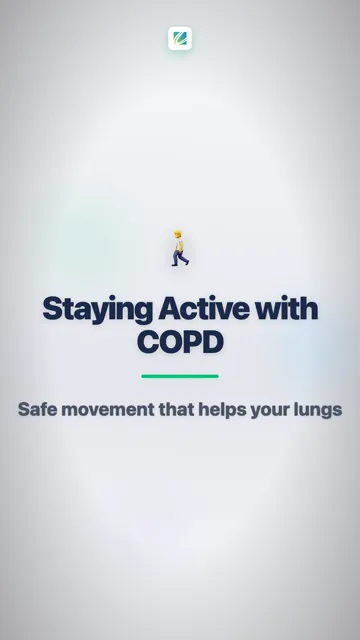
Moving Makes Breathing Easier
It may seem backward. When you're short of breath, the last thing you want is to move. But here's the good news. Gentle, regular activity helps your body use the oxygen you have more efficiently. Over time, that can mean less fatigue and less breathlessness. Stronger muscles ask for less air. Let's see how to do it safely.
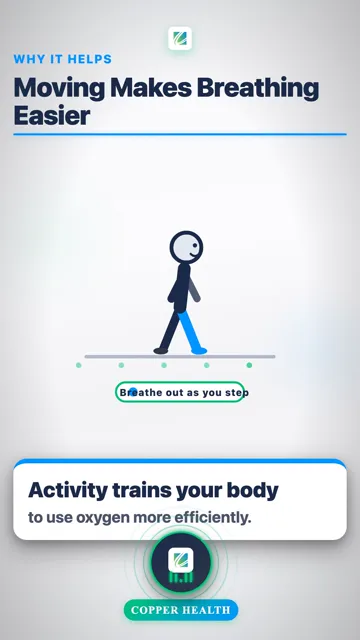
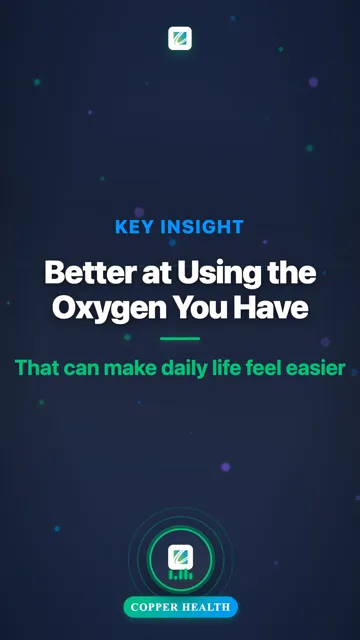
Better at Using the Oxygen You Have
So here's the key idea. Activity doesn't give you more oxygen. It makes your body better at using the oxygen you already have. And that can make daily life easier.
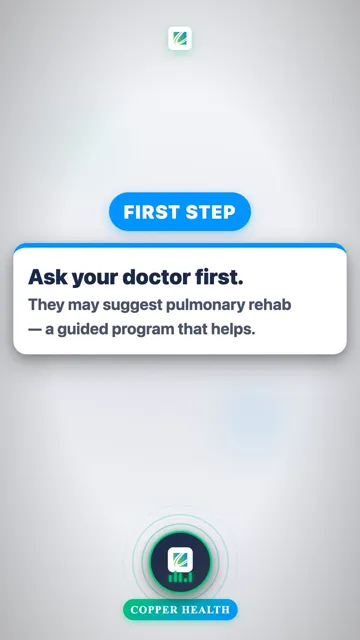
First Step — Ask your doctor
But first, an important step. Before you start, ask your doctor what's safe for you. They may suggest pulmonary rehab. That's a guided program where trained staff help you exercise safely, at your own pace.
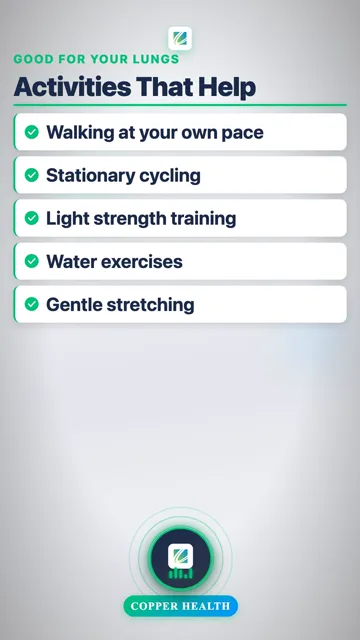
Activities That Help
So what counts as good activity? Good news, you have choices. Walking at your own pace is one of the best. You might also try a stationary bike. Or light strength training, using small weights or even cans of soup. Water exercises are gentle on your joints and easy to breathe through. And simple stretching keeps you loose. Pick what you enjoy. The best activity is the one you'll keep doing.
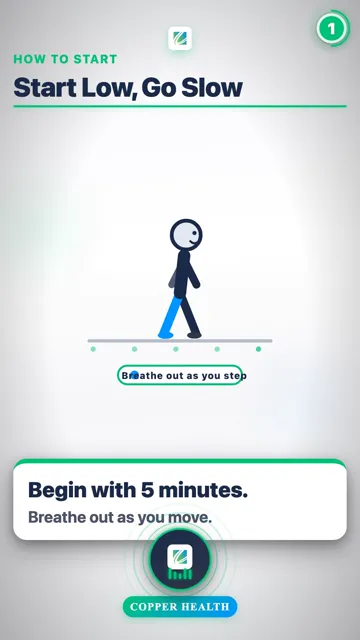
Start Low, Go Slow
Now, how to begin. The rule is simple. Start low, go slow. On day one, just five minutes is plenty. A short walk down the hall and back. Then add a little more each week, aiming for most days. And here's the breathing trick. As you step or push, breathe out slowly through pursed lips, like blowing out a candle. Breathe in as you ease up. This keeps your breath calm.
Try the Talk Test
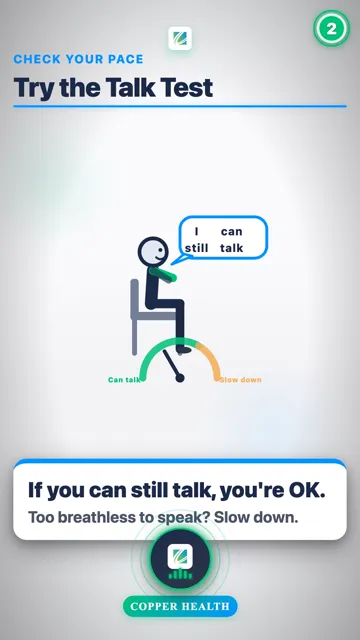
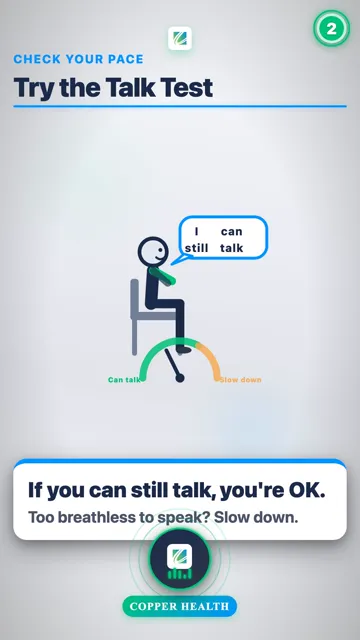
Here's an easy way to check your pace. The talk test. As you move, try to say a short sentence out loud. If you can still talk, even a little breathy, your pace is just right. But if you're too out of breath to get the words out, that's your signal to slow down or rest. Your own voice tells you when to ease off. Let it guide you.
STOP IF
Just as important, know when to stop. Stop right away if you have severe shortness of breath. Or chest pain or pressure. Or if you feel dizzy or faint. Or if your breath won't recover, even after you rest. If that happens, stop, rest, and call your doctor.
A Little Each Day Adds Up
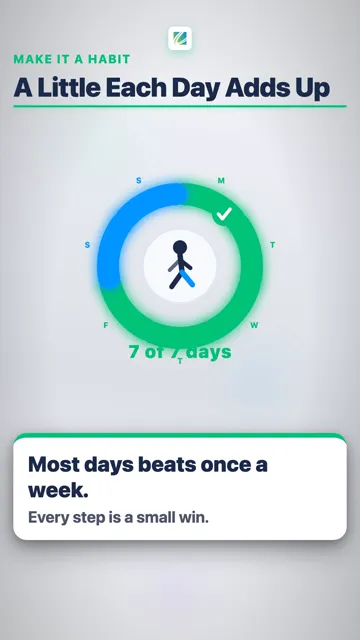
Here's the secret. Consistency beats intensity. A little movement most days does far more for your lungs than one big push once a week. So keep it small and regular. A short walk after breakfast. And celebrate every step. Each one is a small win, and they add up. On hard-breathing days, do less, but do something.
Movement is medicine
Before we finish, what's the talk test telling you when you can't speak? Slow down. Start where you are, keep moving daily. Movement is medicine.
Up next: blood sugar
You've got moving covered. But there's another quiet health problem that hides in plain sight, and most people miss the signs. Want to know what to watch for? Watch next.
About this information
This information was created with AI assistance and is for educational purposes only. AI can make mistakes. Always follow your doctor's advice and consult your healthcare provider for medical decisions.