


Most falls happen at home.
Most falls happen at home, in the rooms you know best. Let's make yours safer.

Home Safety Checklist
We'll go room by room, and spot what to fix.

Some fixes are free. Others could save you from a broken hip.
Did you know over half of all falls happen at home? When a place feels familiar, your eyes stop seeing the hazards. Here's the good news. Some fixes cost nothing. Others, like a grab bar, could save you from a broken hip. Let's walk through your home.

Bathroom — The most dangerous room for falls
Let's start with the bathroom. It's the most dangerous room for falls. Wet, slippery surfaces and hard floors make it the highest-risk room.

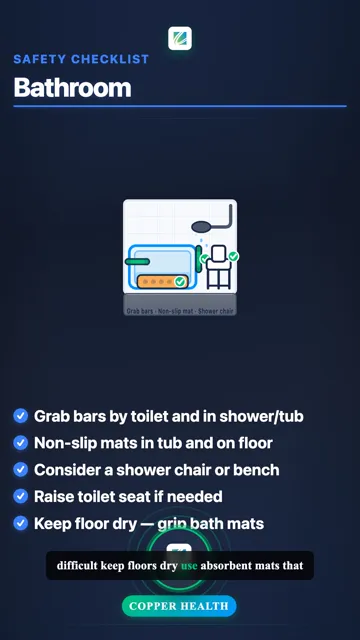
Bathroom
Here's your bathroom checklist. Put real grab bars by the toilet and in the shower. Bolt them to the wall — a towel rack won't hold your weight. Use non-slip mats in the tub and on the floor. A shower chair lets you sit to wash. If standing from the toilet is hard, a raised seat helps. Keep the floor dry.
Bedroom — Where nighttime falls often happen
Next, the bedroom, where many falls happen at night.

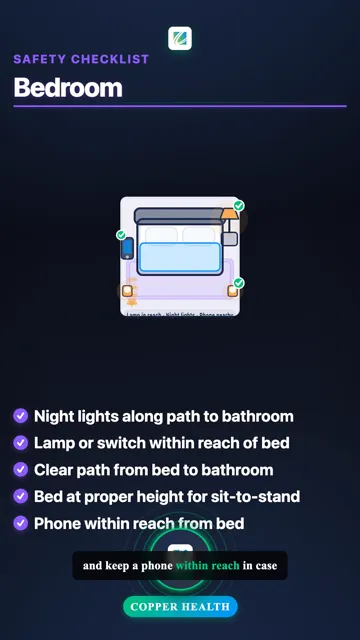
Bedroom
The night trip to the bathroom is risky. Add night lights along the path. Keep a lamp or switch within reach of your bed. Clear the path of trip hazards. Set your bed at an easy height. Keep your phone by the bed.
Stairs — Going down is riskier than going up
The stairs. Going down is riskier than going up.
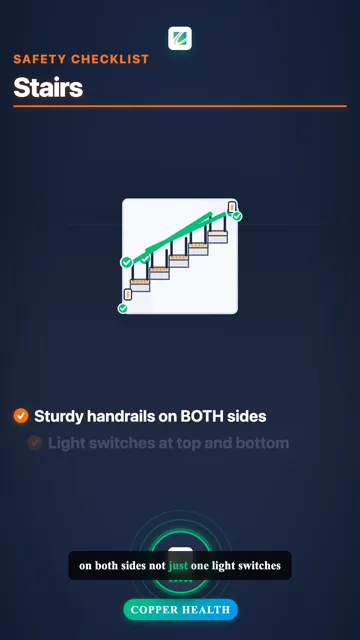
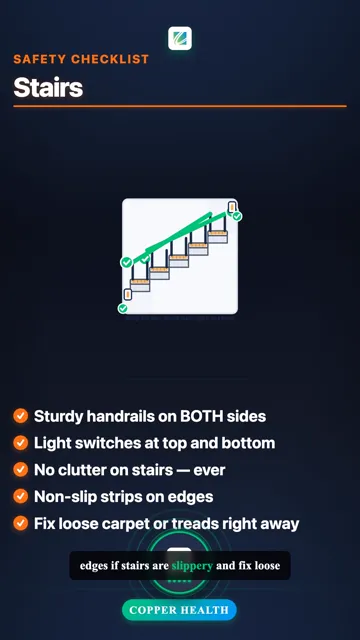
Stairs
Stairs need extra care. Put sturdy handrails on both sides. Add light switches at the top and bottom. Keep the steps clear of clutter. Put non-slip strips on the edges. And if the carpet or a step feels loose, fix it right away.
Living Areas — Clear paths and secure furniture
Your living areas. Clutter is the biggest hazard.
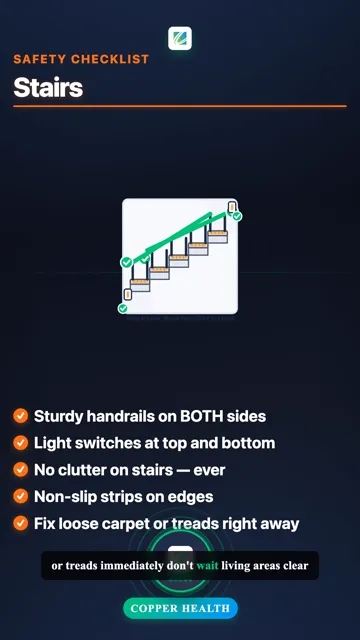
Living Areas
In your living room, throw rugs are the number one trip hazard. Remove them, or tape them down. Keep cords out of your walkways. Arrange furniture for clear, open paths. Choose chairs with armrests, so it's easier to stand. And keep the things you use most within reach.
Throughout the Home
A few things help everywhere. Keep your lighting bright. Fix any loose floorboards or torn carpet. Keep a phone on each floor, in case you ever need help. And wear supportive shoes, not loose slippers or bare feet.
HELPFUL TIP
Here's a tip. Walk through your home with fresh eyes. Ask a family member to spot hazards you've stopped noticing.
REMEMBER
Quick — can you name one fix for your home? Grab bars. Good lighting. No throw rugs. Clear paths.
The home is safer. But are YOU?
Your home is safer. But is your body ready? One exercise could stop a fall before it starts. Watch next.
About this information
This information was created with AI assistance and is for educational purposes only. AI can make mistakes. Always follow your doctor's advice and consult your healthcare provider for medical decisions.