


Your skin tears too easily.
Does your skin tear too easily? Here's how to protect it.

Preventing Skin Tears
Today, simple ways to prevent and care for skin tears.
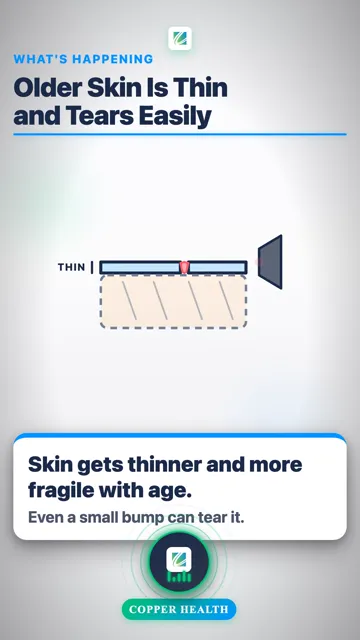
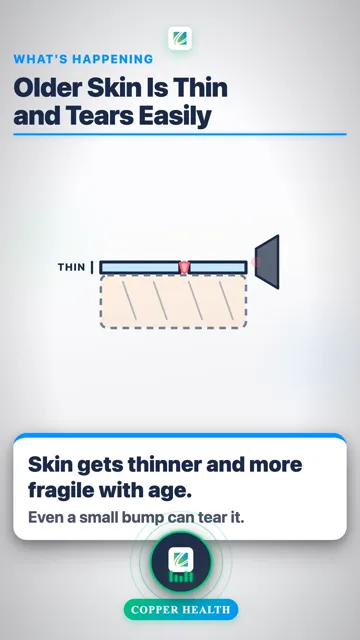
Older Skin Is Thin and Tears Easily
So why does this happen? As we age, our skin gets thinner and more fragile — almost like paper. So even a small bump, against a door frame or a bed rail, can tear it. The good news? A few easy habits can keep it safer.
3 Easy Ways to Prevent Tears
There are three easy ways to prevent skin tears. Small daily habits make a difference.
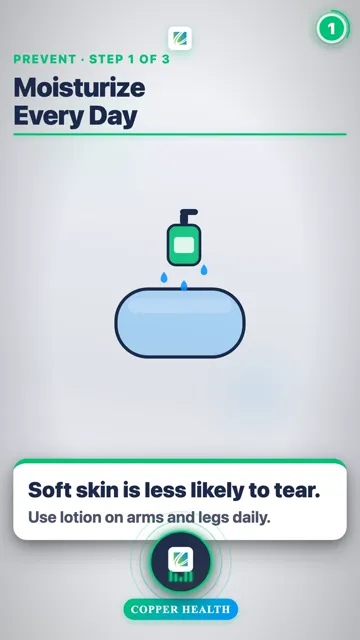
Moisturize Every Day
Step one. Moisturize every day. Dry skin cracks and tears more easily. So rub a gentle lotion onto your arms and legs each day, especially after a bath. Soft skin is less likely to tear.
Cover Up and Pad Edges
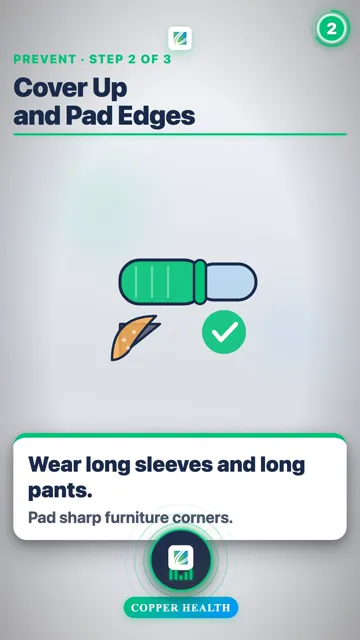
Step two. Cover up, and pad sharp edges. Long sleeves and long pants add a soft layer over your skin. And put padding on sharp furniture corners. Then a bump lands on padding — not on you.
Clear the Path and Be Gentle
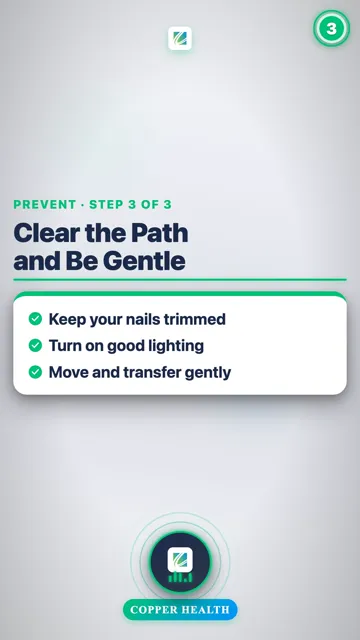
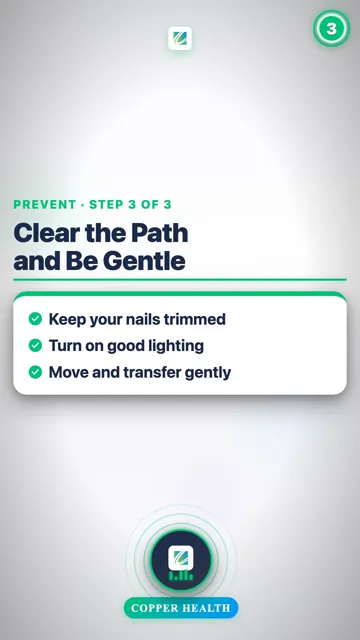
Step three. Clear the path, and be gentle. Keep your fingernails trimmed short, so a scratch can't tear your skin. Turn on good lighting so you can avoid bumps. And move slowly — when you get up or transfer, do it gently.
If a Tear Happens
But what if a tear does happen? Stay calm — a few gentle steps can help it heal.
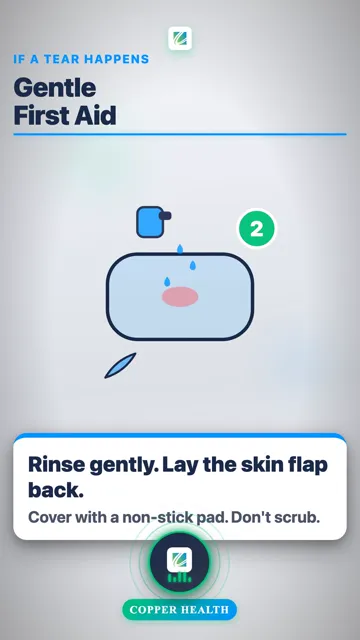
Gentle First Aid
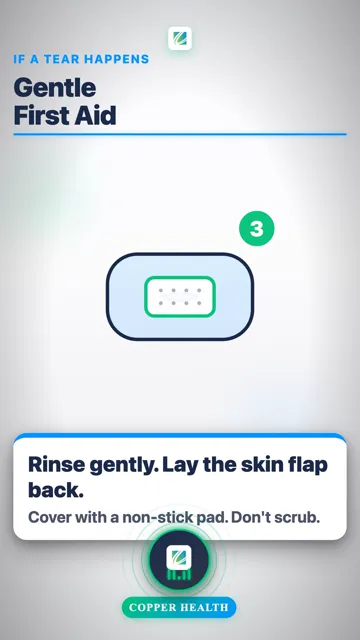
Here's the gentle first aid. First, rinse the area gently with clean water. Don't scrub, and skip the peroxide or alcohol — they can hurt new skin. If a flap of skin is still attached, gently lay it back in place if you can. Then cover it with a non-stick pad — not regular sticky tape, which can pull the skin. And call your home health nurse.
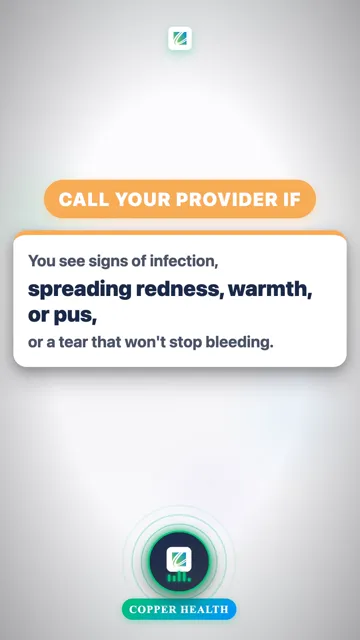
Call Your Provider If
Now, call your provider if you see signs of infection — spreading redness, warmth, or pus. Or if a tear keeps bleeding and won't stop. Don't wait — make the call.
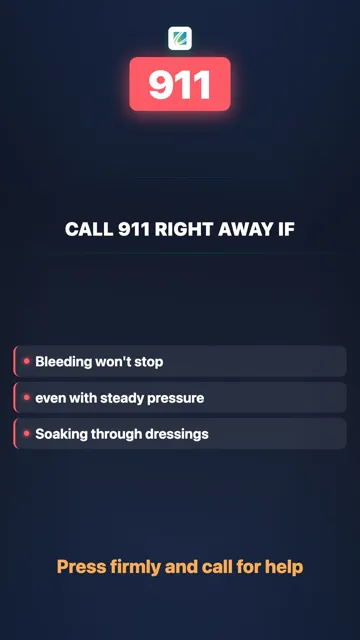
CALL 911 RIGHT AWAY IF
Some bleeding is an emergency. Press firmly on the wound with a clean cloth. If the bleeding won't stop, even with steady pressure — or it's soaking through dressings — call 911 right away. Keep pressing while you wait for help.
Watch for Infection
In the days after, watch the wound for infection. Look for spreading redness or warmth, pus or a bad smell, more pain or swelling, or a fever.
Remember
So remember three things. Moisturize. Cover and pad. And be gentle with your skin.

Next: catch sores early
Next — pressure sores, and how to catch them before they start. Watch next.
About this information
This information was created with AI assistance and is for educational purposes only. AI can make mistakes. Always follow your doctor's advice and consult your healthcare provider for medical decisions.