


It starts in your leg.
It can start in your leg. A clot you can't ignore.

Spotting Blood Clots
Today, how to spot a blood clot — in your legs, and in your lungs.

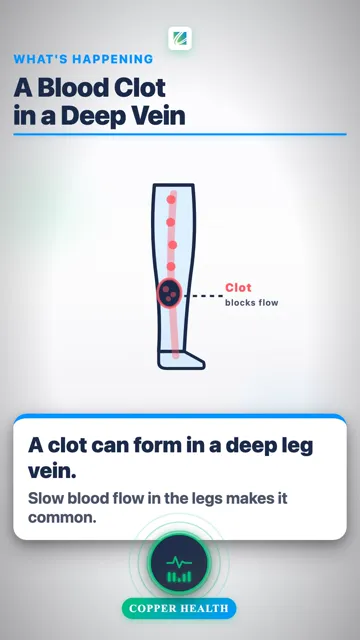
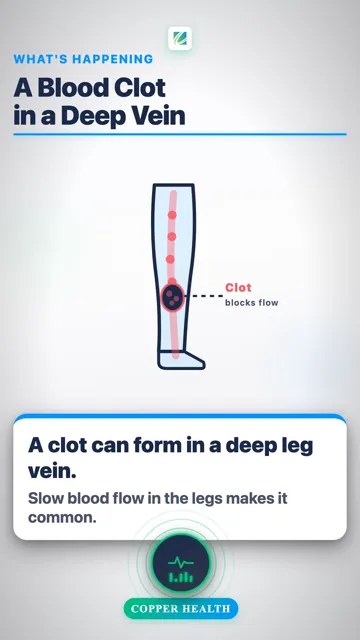
A Blood Clot in a Deep Vein
So what is a blood clot? It's a clump of blood that can form inside a deep vein — most often, deep in your leg. The clot blocks normal blood flow. Blood moves slower through the legs, so that's where clots often start.
3 Leg Warning Signs
There are three warning signs in the leg. The big clue? They're usually in just one leg.
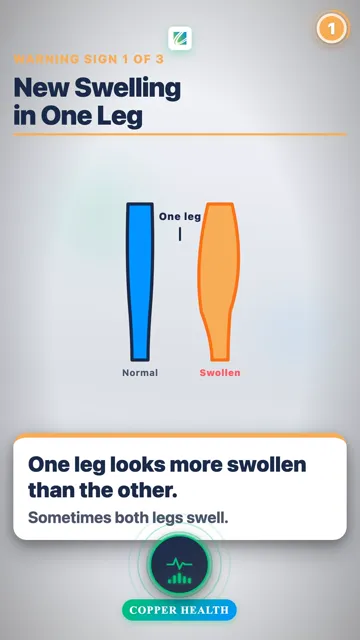
New Swelling in One Leg
Sign one. New swelling in one leg. You may notice one leg, or one ankle, looks puffier than the other. Sometimes both legs swell — but new swelling in just one leg is the classic clue.
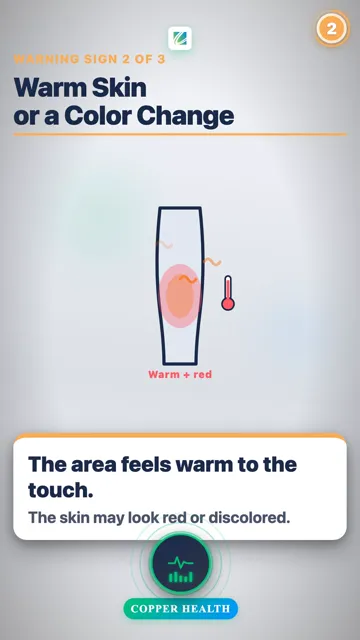
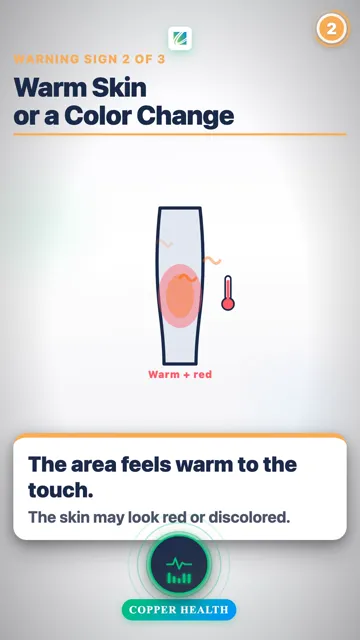
Warm Skin or a Color Change
Sign two. Warmth and a color change. The sore spot may feel warm to the touch, warmer than the same spot on your other leg. The skin there may also look red or darker than usual. Pay attention.
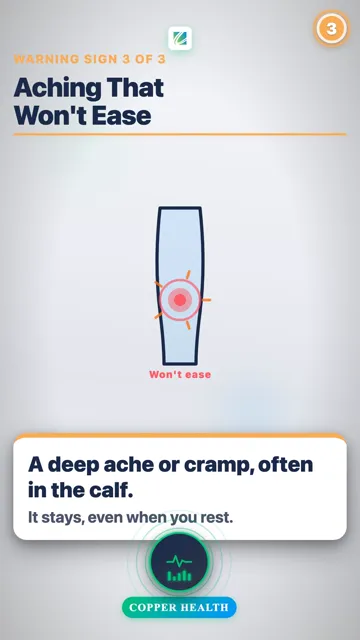
Aching That Won't Ease
Sign three. An ache that won't ease. It often feels like a deep cramp or soreness in your calf. Unlike a normal cramp, it doesn't go away when you rest or stretch — it just stays.
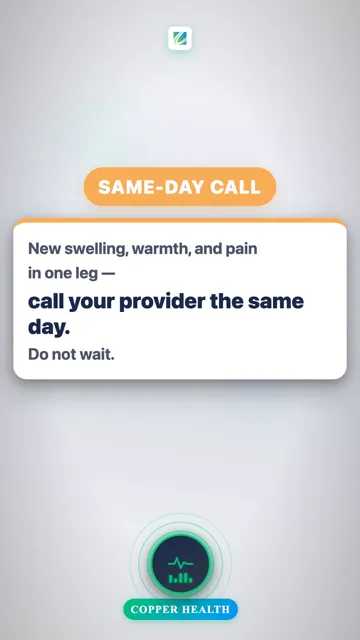
Same-Day Call
Here's the rule. New swelling, warmth, and pain in one leg — call your provider the same day; do not wait.
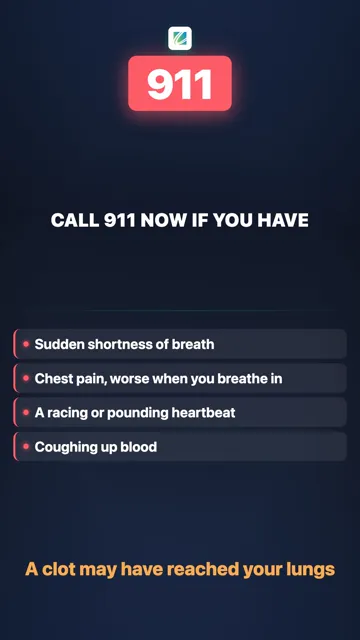
CALL 911 NOW IF YOU HAVE
But some signs are an emergency. Sudden shortness of breath, chest pain that's worse when you breathe in, a racing heartbeat, or coughing up blood — call 911 now. A clot may have reached your lungs.
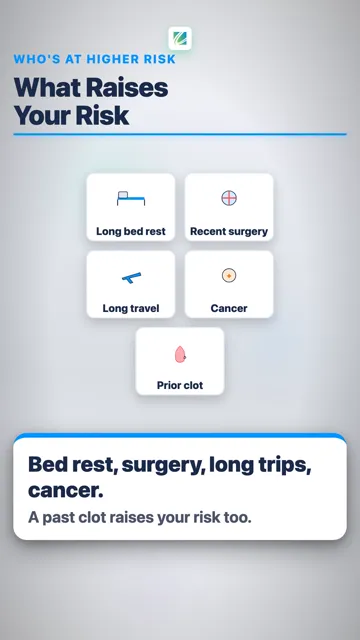
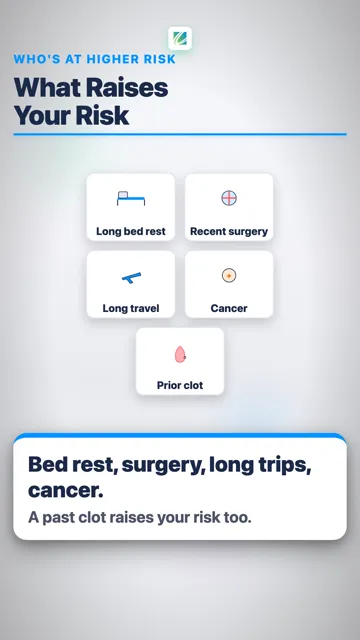
What Raises Your Risk
Who's most at risk? Long bed rest, a recent surgery, or sitting still on a long car or plane trip. Cancer raises the risk too. And if you've had a clot before, you're more likely to get another.
Keep Blood Moving
To lower your risk, keep your blood moving. Pump your ankles and legs often. Get up and walk when you can. Drink plenty of water. Wear compression stockings if your provider prescribes them. And take your blood thinner exactly as you're told.
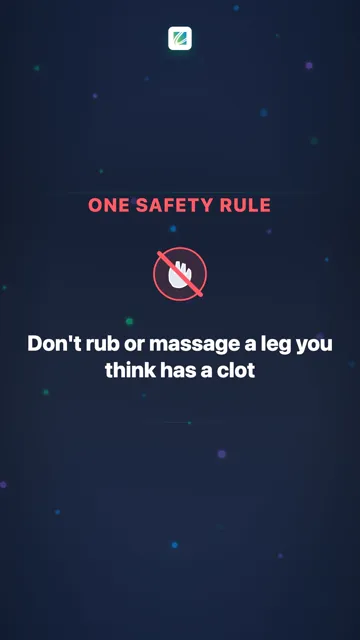
One Safety Rule
One safety rule. Don't rub or massage a leg you think has a clot. Just call for help.
Remember
So remember three things. The leg signs. Lungs mean 911. And keep moving. When in doubt, call for help.
Next: trouble breathing?
Sudden breathing trouble has more than one cause — next, how to spot pneumonia in older adults.
About this information
This information was created with AI assistance and is for educational purposes only. AI can make mistakes. Always follow your doctor's advice and consult your healthcare provider for medical decisions.